
Published by Osaka JOINER.
Local travel experts and licensed guides based at our information lounge in Namba Walk (B1F), operating under the Osaka Metro Group.
.png?width=2000&height=1414&name=%E5%90%8D%E7%A7%B0%E6%9C%AA%E8%A8%AD%E5%AE%9A%E3%81%AE%E3%83%87%E3%82%B6%E3%82%A4%E3%83%B3%20(1).png) Photo Source:Osaka Metro Adera
Photo Source:Osaka Metro Adera
Osaka is a vibrant, food-fueled metropolis that easily warrants several days of exploration. Yet, its geographic position in the center of the Kansai region is perhaps its greatest travel asset.
Kyoto, Nara, Kobe, and Himeji are all close enough to explore without packing up your bags and changing hotels. Push a little farther, and you can hike through the ancient cedar groves of Mount Koya, stroll along the feudal canals of Kurashiki, soak in the restorative waters of Arima Onsen, or board a Shinkansen to reach Hiroshima in under 90 minutes.
The options are incredible. Sometimes, overwhelmingly so.
If you have a limited schedule in Kansai, choosing the right day trips from Osaka matters significantly more than checking off destinations simply because they trend on social media. As a local travel team based in central Namba, we help hundreds of international visitors navigate Western Japan every season. From firsthand experience, the best day trip is always the one that aligns with your travel pace and interests.
This 2026 guide breaks down 15 of the best day trips from Osaka. It covers verified travel times, departure hubs, realistic time allocations, do-it-yourself (DIY) difficulty levels, and clear advice on where exploring independently is effortless versus where a local guide adds invaluable cultural context.
Best Day Trips from Osaka at a Glance (2026)
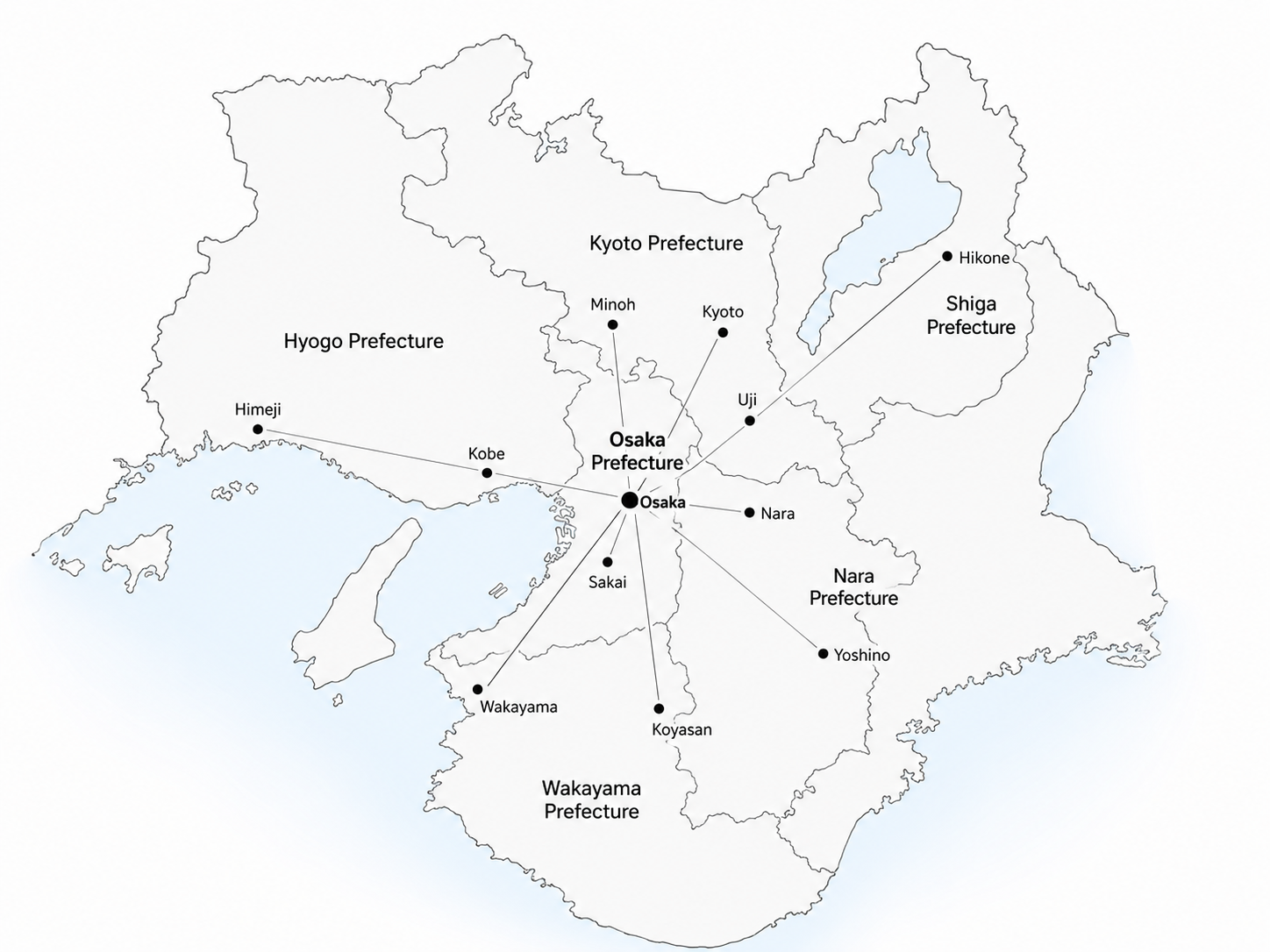 Photo Source: Osaka Metro Adera
|
Destination |
Travel Time |
Best Departure Hub |
Key Transit Line |
Best For |
DIY Difficulty |
|
Kyoto |
30–50 min |
Osaka / Umeda |
JR Special Rapid / Hankyu |
Temples, Shrines, Traditional Streets |
★☆☆ (Easy) |
|
Nara |
35–45 min |
Osaka-Namba |
Kintetsu Nara Line |
Deer Park, Todai-ji Giant Buddha |
★☆☆ (Easy) |
|
Kobe |
20–30 min |
Osaka / Umeda |
JR Kobe Line / Hanshin |
Kobe Beef, Harbor Views, City Walks |
★☆☆ (Easy) |
|
Himeji |
30–60 min |
Osaka or Shin-Osaka |
JR Special Rapid / Shinkansen |
Historic Samurai Castle, Gardens |
★☆☆ (Easy) |
|
Uji |
45–60 min |
Osaka / Yodoyabashi |
Keihan Main Line / JR |
Matcha Culture, Byodoin Temple |
★☆☆ (Easy) |
|
Minoh & Katsuo-ji |
30–60 min |
Osaka-Umeda |
Hankyu / Kita-Osaka Kyuko |
Waterfall Hike, Scenic Daruma Temple |
★★☆ (Moderate) |
|
Sakai |
15–30 min |
Namba |
Nankai Koya / Main Line |
Knife Crafting, Tea Master Rikyu |
★★☆ (Moderate) |
|
Arima Onsen |
60–75 min |
Umeda / Hankyu-Sanban |
Express Bus / Kobe Subway+Hokushin |
Historic Hot Springs, Relaxation |
★☆☆ (Easy) |
|
Hikone & Biwa |
75–90 min |
Osaka Station |
JR Special Rapid (Biwako Line) |
Original Castle, Peaceful Lake Views |
★☆☆ (Easy) |
|
Mount Yoshino |
90–120 min |
Osaka-Abenobashi |
Kintetsu Express / Limited Exp. |
Cherry Blossoms, Mountain Temples |
★★☆ (Moderate) |
|
Koyasan |
80–100 min |
Namba |
Nankai Koya Line + Cable Car |
Shingon Buddhism, Okunoin Cemetery |
★★☆ (Moderate) |
|
Kurashiki |
75–90 min |
Shin-Osaka |
Sanyo Shinkansen + Local JR |
Feudal Canals, Preserved Storehouses |
★☆☆ (Easy) |
|
Asuka |
60–80 min |
Osaka-Abenobashi |
Kintetsu Yoshino Line |
Countryside Cycling, Ancient Tombs |
★★☆ (Moderate) |
|
Wakayama City |
60–75 min |
Namba |
Nankai Main Line Limited Express |
Castle, Ramen, Cat Stationmaster |
★☆☆ (Easy) |
|
Hiroshima & Miyajima |
~90 min |
Shin-Osaka |
Sanyo Shinkansen + Local Ferry |
Peace Memorial, Floating Torii Gate |
★★☆ (Long Day) |
Classic Day Trips Under 1 Hour
These destinations require minimal transit, feature high-frequency train connections, and serve as the foundational highlights of any Kansai itinerary.
1. Kyoto: The Historic Capital
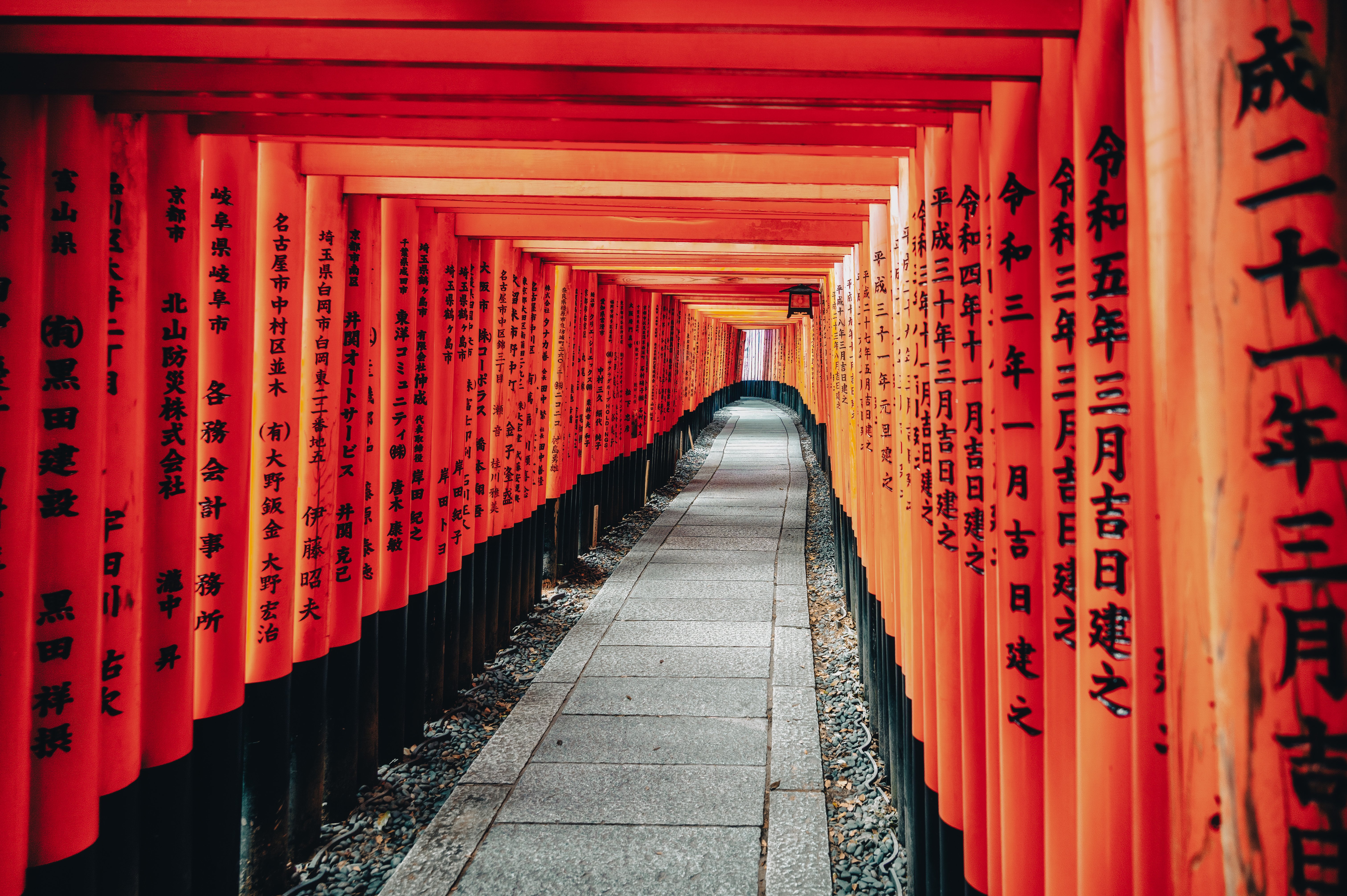 Photo Source: Adobe Stock
- Travel Time: 30 to 50 minutes
- Best Departure Hub: Osaka / Umeda Station (Hankyu or JR) or Yodoyabashi (Keihan)
- Key Transit Lines: JR Special Rapid, Hankyu Kyoto Main Line, Keihan Main Line
- Best For: First-time travelers, historic shrines, Buddhist temples, traditional districts
- Time Needed: Full day
- DIY Difficulty: ★☆☆ (Easy to reach; moderate to navigate between districts)
Kyoto served as Japan’s imperial capital for over a millennium, resulting in an extraordinary density of UNESCO World Heritage sites, Zen rock gardens, and preserved wooden merchant quarters. Because it sits right next to Osaka, you can reach central Kyoto faster than commuting across many major global capitals.
What to See & Common Pitfalls
First-time travelers often try to tackle Fushimi Inari, Kiyomizu-dera, Kinkaku-ji (The Golden Pavilion), Arashiyama Bamboo Grove, and Nishiki Market in a single excursion. Doing so turns an enjoyable cultural journey into hours lost in bus queues.
We strongly recommend zoning your day into a single quadrant:
- Eastern Classic: Start early at Fushimi Inari Taisha (beat the 8:30 AM crowds), move to Kiyomizu-dera, stroll down the historic stone slopes of Ninenzaka and Sannenzaka, and finish walking through Gion toward Kawaramachi.
- Western Nature: Dedicate your journey to western Kyoto by taking the Hankyu Line directly to Arashiyama for the bamboo groves, Tenryu-ji temple gardens, and scenic Katsura riverbanks.
When a Local Guide Adds Value
Reaching Kyoto on your own is simple. However, the cultural divide between simply snapping a picture in front of a shrine and understanding why that shrine exists, how architectural elements evolved, or how locals practice worship is vast. A private walking guide helps bypass crowded choke-points, introducing hidden side-alleys and private teahouses that self-guided tourists routinely miss.
- Local Tip: Never default blindly to JR Kyoto Station. If heading to Arashiyama or Gion, taking private rail lines (Hankyu or Keihan) from Umeda or Yodoyabashi drops you directly into those sightseeing districts without requiring crowded local Kyoto city buses.
2. Nara: Ancient Temples and Free-Roaming Deer
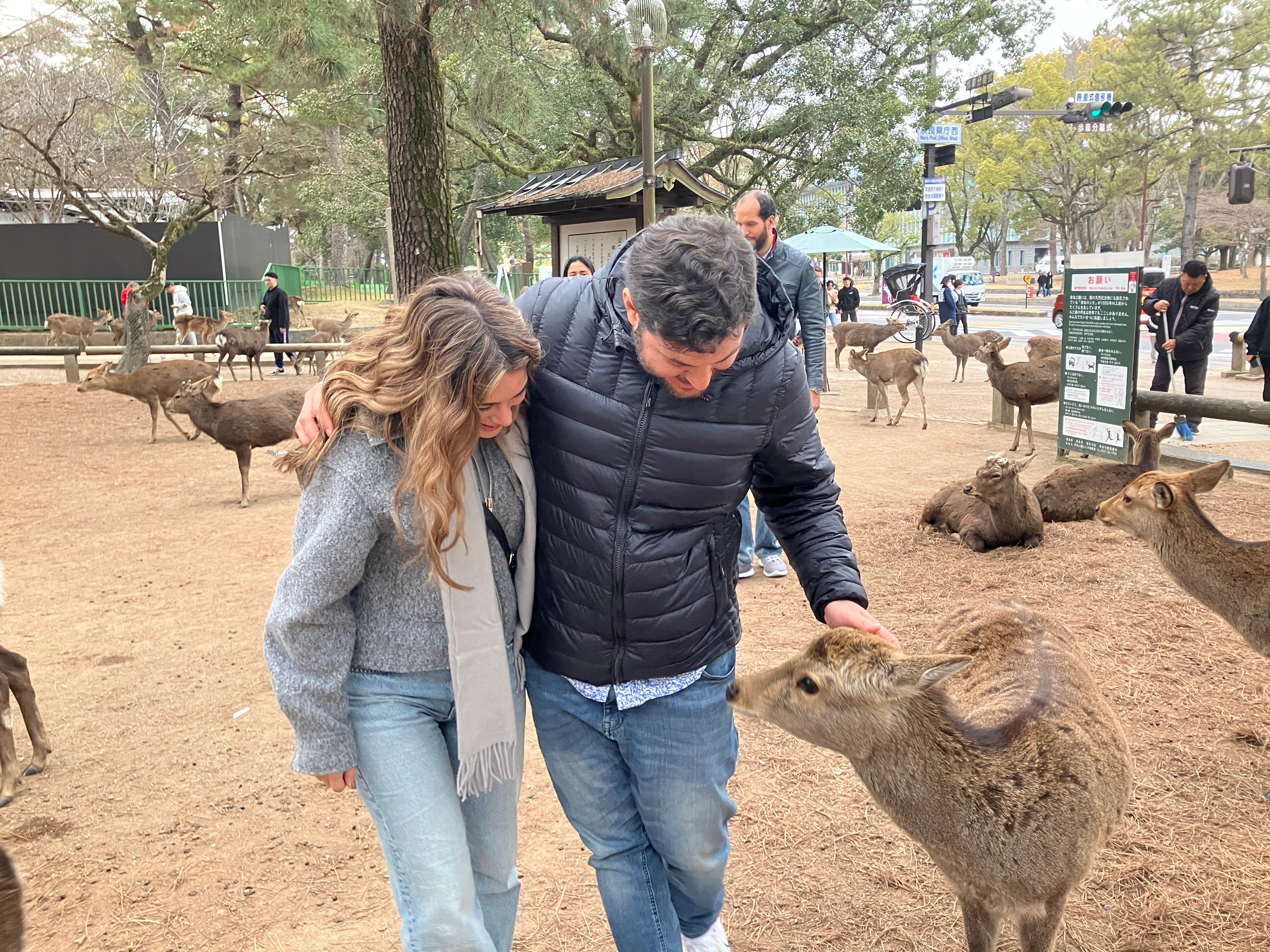 Photo Source: Osaka Metro Adera
- Travel Time: 35 to 45 minutes
- Best Departure Hub: Osaka-Namba Station
- Key Transit Lines: Kintetsu Nara Line (Rapid Express)
- Best For: Families, ancient history, giant architecture, walking in nature
- Time Needed: Half day or full day
- DIY Difficulty: ★☆☆ (Very Easy)
Before Kyoto, Nara was Japan’s first permanent imperial capital (Heijo-kyo) in the 8th century. Today, it presents a significantly more peaceful, walkable, and compact alternative to Kyoto’s bustling streets.
What to See in Nara
- Nara Park: Home to over 1,000 protected, free-roaming sacred sika deer.
- Todai-ji Temple (Daibutsuden): One of the world's largest wooden buildings, housing the celebrated 15-meter bronze Daibutsu (Great Buddha).
- Kasuga Taisha: Nara’s most celebrated Shinto shrine, famed for thousands of stone lanterns lining its mossy forest approaches.
- Naramachi: The old merchant district south of the park, ideal for craft shopping and quiet lunch stops.
When a Local Guide Adds Value
Many tourists buy deer crackers, take a selfie, visit the Great Buddha hall, and leave within two hours. A guide contextualizes the deep theological balance between Buddhism and native Shintoism, explains the legendary origin of the deer as divine messengers, and leads you away from the central park lawns into primeval forest walks and tranquil sub-temples like Nigatsu-do.
Check availability: Book Directly through Osaka JOINER
- Local Tip: The deer are wild. Avoid holding deer crackers (shika-senbei) in open bags; feed them calmly and show empty, open palms once finished so they lose interest peacefully.
3. Kobe: Harbor Vistas, Western Enclaves, and Kobe Beef
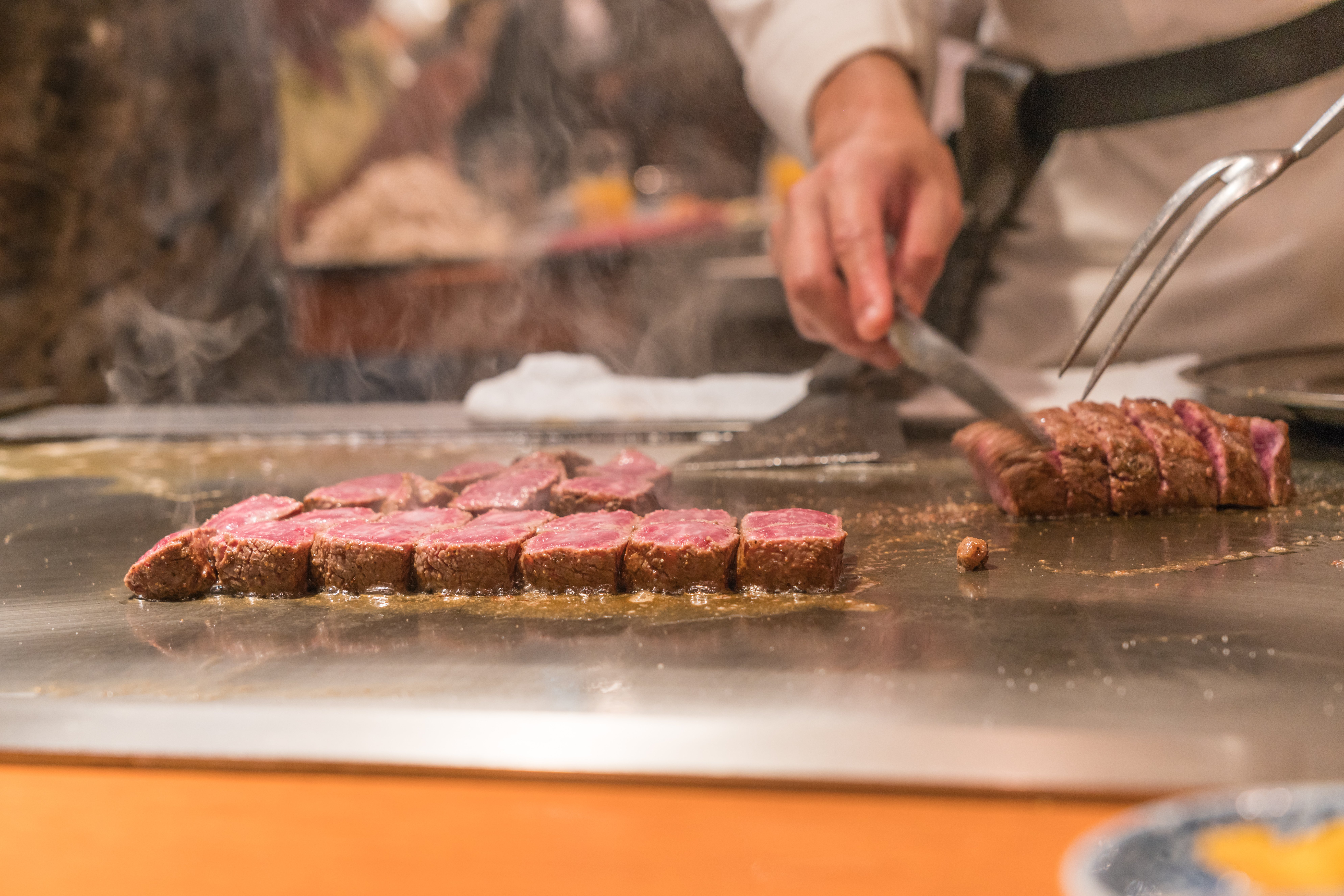 Photo Source: Adobe Stock
- Travel Time: 20 to 30 minutes
- Best Departure Hub: Osaka / Umeda Station
- Key Transit Lines: JR Kobe Line (Special Rapid) or Hanshin Main Line
- Best For: Food enthusiasts, harbor scenery, shopping, couples
- Time Needed: Half day or full day
- DIY Difficulty: ★☆☆ (Very Easy)
Flanked by the Rokko mountain range to the north and Osaka Bay to the south, Kobe is a sophisticated, cosmopolitan port city that opened to international trade in 1868. It provides a distinct change of architectural scenery from traditional Kansai temples.
What to Do in Kobe
- Kitano Ijinkan-gai: Stroll the hillside neighborhood featuring preserved 19th-century Western residences once occupied by foreign diplomats and merchants.
- Authentic Kobe Beef: Savor genuine Tajima-strain wagyu. Booking a lunchtime teppanyaki reservation is significantly more budget-friendly than formal evening dining while offering the identical culinary standard.
- Nunobiki Herb Gardens & Ropeway: Located right behind Shin-Kobe Station, this cable car carries you up Mount Rokko for panoramic cityscape views and waterfall trails.
- Meriken Park & Harborland: Enjoy a relaxed seaside walk past the red Kobe Port Tower as sunset illuminates the harbor.
- Local Tip: If dining on certified Kobe beef is your primary mission, always secure reservations at least 2 to 3 weeks ahead. Walk-ins at top-tier teppanyaki houses are virtually impossible during high travel seasons.
4. Himeji: Japan’s Premier Surviving Samurai Fortress
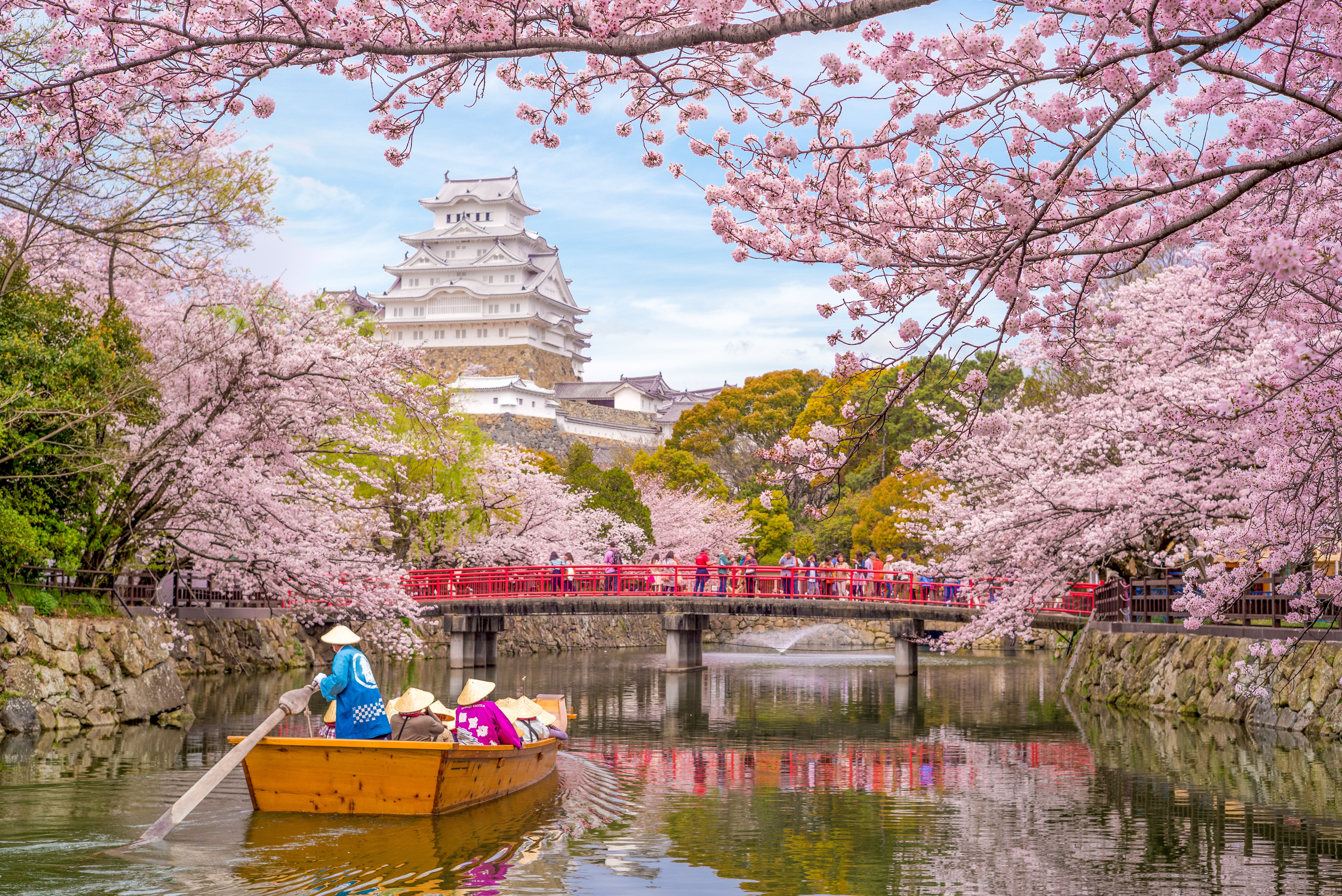 Photo Source: Adobe Stock
- Travel Time: 30 minutes (Shinkansen from Shin-Osaka) or 60 minutes (JR Special Rapid from Osaka Station)
- Best Departure Hub: Osaka Station or Shin-Osaka Station
- Key Transit Lines: JR Sanyo Shinkansen or JR Special Rapid
- Best For: Samurai history, authentic feudal architecture, expansive Japanese gardens
- Time Needed: Half day or full day
- DIY Difficulty: ★☆☆ (Very Easy)
Unlike castle reconstructions built from modern concrete in the mid-20th century, Himeji Castle (The White Heron) is the authentic 17th-century wooden complex. Recognized as Japan's first UNESCO World Heritage cultural site, its towering multi-tier keep and intricate defensive baileys survived wartime bombing, civil disputes, and natural disasters.
Recommended Itinerary
- The Castle Keep: Ascend the steep, polished interior wooden staircases up six floors to explore architectural defensive systems, weapon racks, and structural joinery.
- Koko-en Garden: Located right alongside the castle moat, this complex features nine separate traditional landscaped gardens constructed over former samurai estates. A combined castle-and-garden ticket offers exceptional value.
- Combine with Kobe: Because a thorough exploration of Himeji takes 3 to 4 hours, pair Himeji in the morning with Kobe’s waterfront or dinner on your train ride back east toward Osaka.
- Local Tip: Arrive right at opening (9:00 AM). The interior keep restricts admission numbers when crowded, and narrow wooden access staircases become bottlenecked by mid-day.
5. Uji: The Capital of Green Tea and Pure Land Splendor
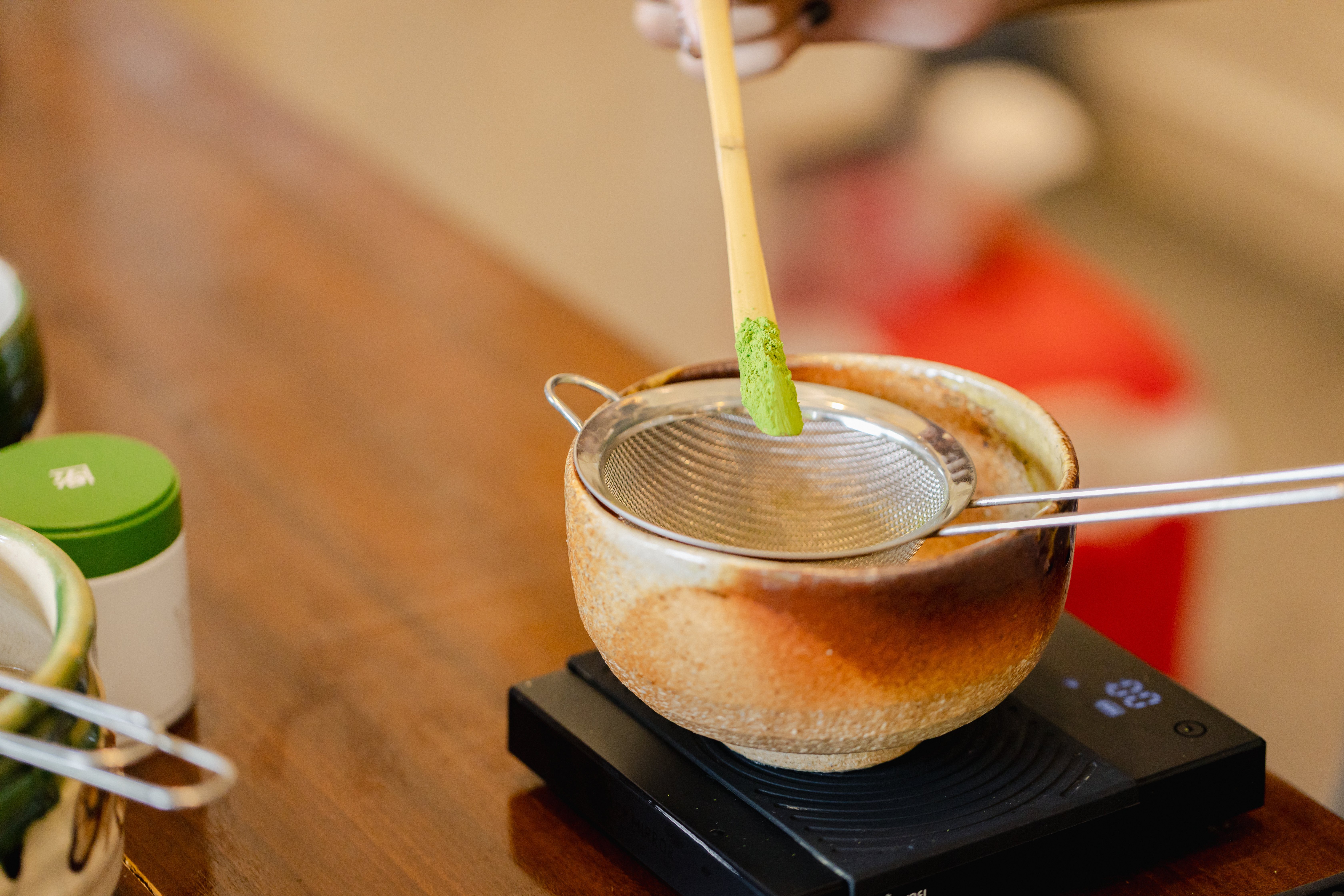 Photo Source: Adobe Stock
- Travel Time: 45 to 60 minutes
- Best Departure Hub: Yodoyabashi or Kyobashi (Keihan Line) or Osaka Station (JR)
- Key Transit Lines: Keihan Uji Line (transfer at Chushojima) or JR Nara Line (via Kyoto)
- Best For: Matcha aficionados, literary history (The Tale of Genji), river scenery
- Time Needed: Half day
- DIY Difficulty: ★☆☆ (Very Easy)
Nestled between Kyoto and Nara, Uji produces what is universally recognized as Japan’s gold standard of green tea and stone-milled matcha. The atmosphere here is noticeably unhurried compared to the major metropolitan centers.
Key Sights
- Byodoin Temple (Phoenix Hall): Constructed in 1053 and immortalized on the Japanese 10-yen coin, its wooden hall was designed to represent the Buddhist Pure Land paradise floating upon a reflective pond.
- Omotesando Street: A vibrant historic promenade packed with century-old tea purveyors offering fresh matcha soft-serve, roasted hojicha, matcha soba noodles, and ceremonial-grade tastings.
- Uji River & Bridges: Walk along scenic riverbanks where traditional cormorant fishing boats moor, cross over to scenic islands, or visit Uji Shrine.
- Local Tip: Skip the rapid grab-and-go treats. Settle into a riverside tea salon (such as Nakamura Tokichi or Tsuen Tea, operating since 1160) for a sit-down single-origin matcha and sweet confection pairing.
6. Sakai: Artisanal Knives, Incense, and Tea History
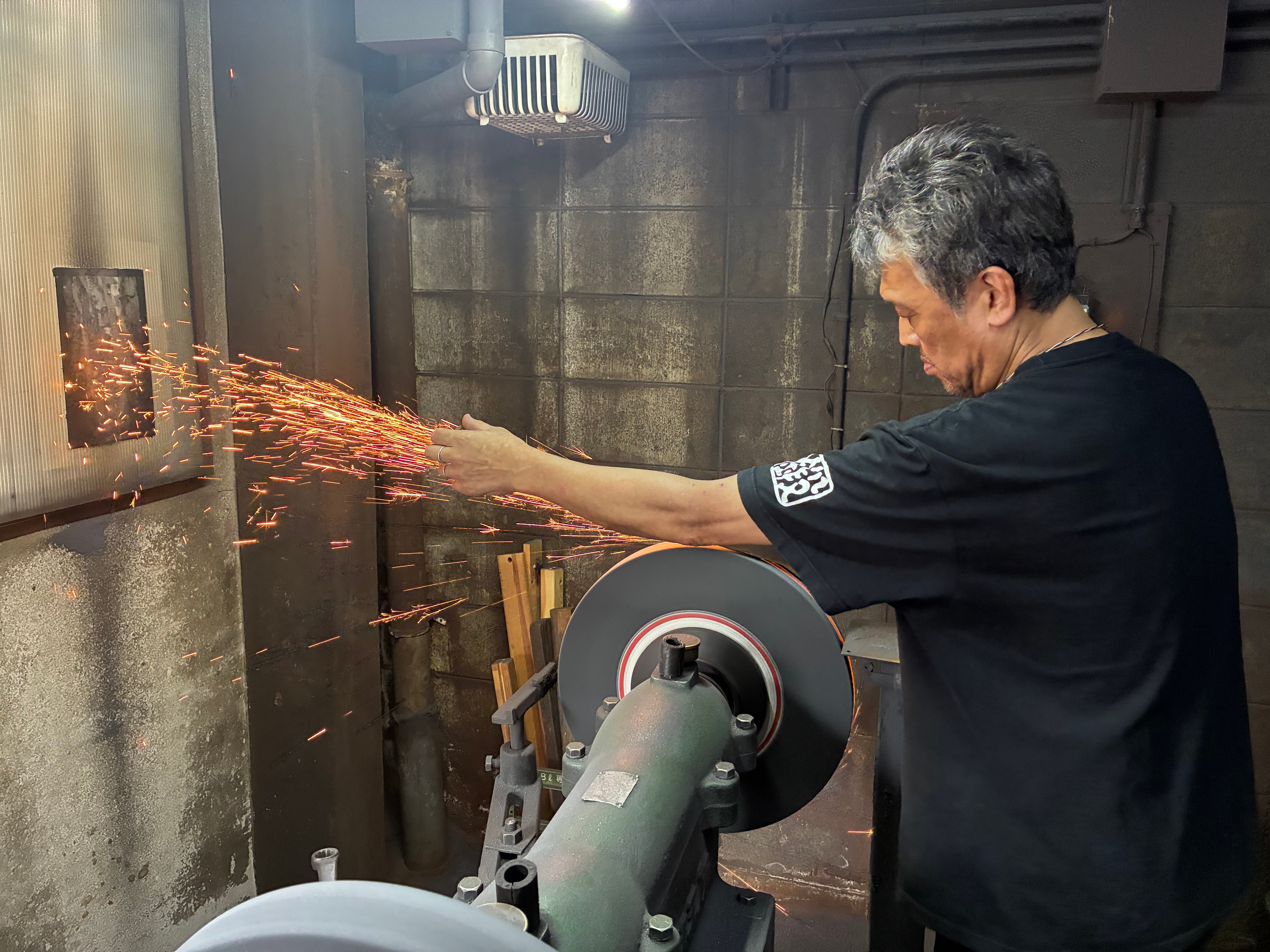 Photo Source: Osaka Metro Adera
- Travel Time: 15 to 30 minutes
- Best Departure Hub: Namba Station
- Key Transit Lines: Nankai Main Line or Nankai Koya Line
- Best For: Cooking enthusiasts, traditional Japanese craft culture, hidden history
- Time Needed: Half day
- DIY Difficulty: ★★☆ (Moderate; workshops are working businesses with limited English signage)
Located directly south of Osaka City, Sakai is an industrial power-hub with ancient roots. It is the historic center of Japan's samurai sword production, which evolved directly into handcrafted culinary knives used by world-renowned chefs today. Sakai is also the birthplace of legendary tea master Sen no Rikyu and the nation’s historic center for incense manufacturing.
What Makes Sakai Unique
Sakai is not an amusement-park-style artisan village; it is an active, living craftsman community. Visiting independent forge workshops, understanding how dual-layer carbon steel is hammered, ground, heat-treated, and whetstone-sharpened across separate specialized ateliers gives an unmatched appreciation for Japanese culinary precision.
Experiencing Sakai with Osaka JOINER
Because authentic Sakai knife-making workshops and incense ateliers are working commercial factories rather than tourist retail shops, walking in without language proficiency or advance permission is rarely productive. Osaka JOINER’s guided Sakai excursions bridge this gap, introducing you directly to licensed masters, translating intricate technical metallurgy, and assisting you in selecting, custom-engraving, and learning how to maintain your own authentic kitchen cutlery.
Check availability: Book directly with Osaka JOINER
- Local Tip: Many knife shops close over weekends or observe irregular workshop hours; always verify operating schedules in advance if visiting independently.
7. Minoh Park & Katsuo-ji: Cascades and Daruma Dolls
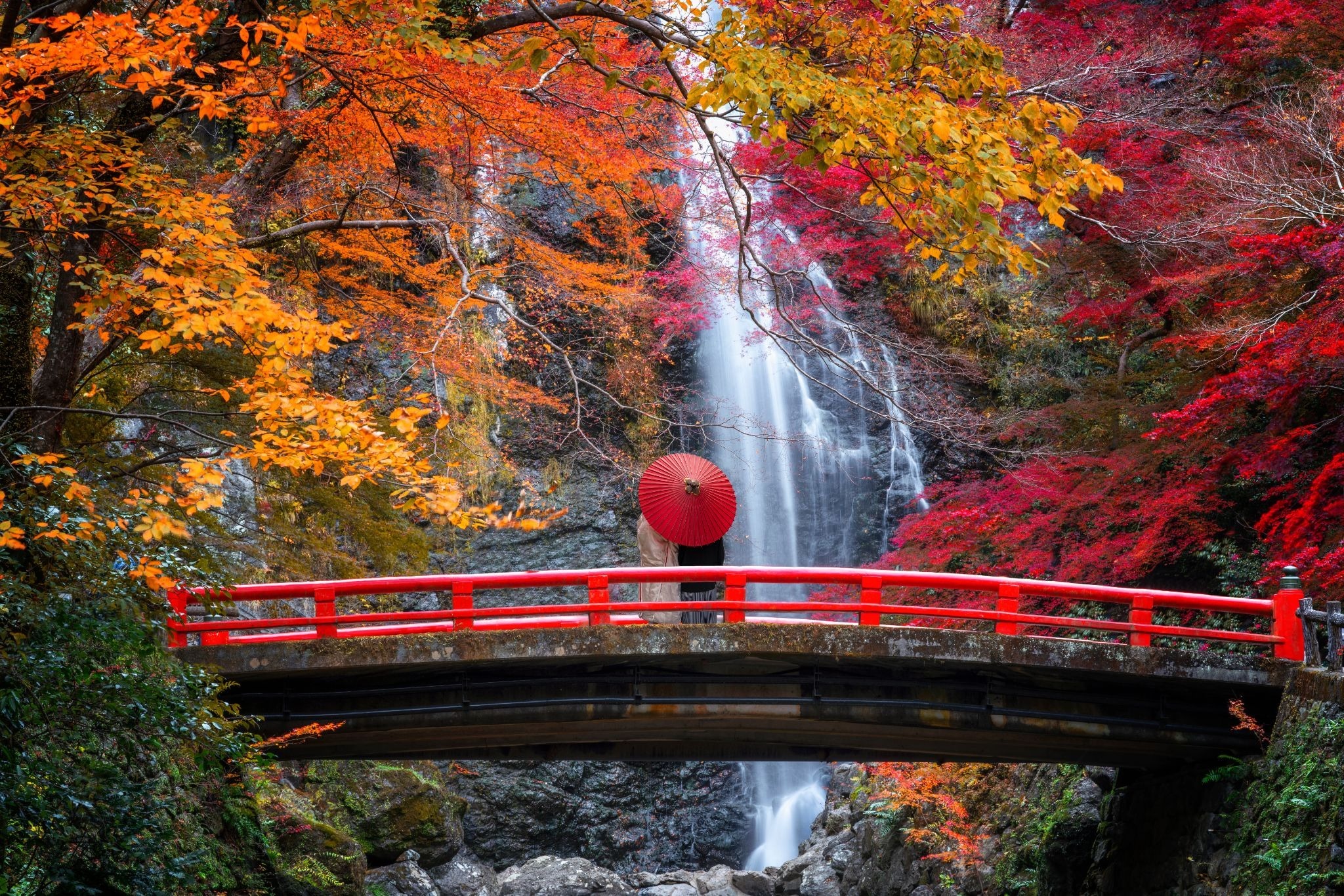 Photo Source: Adobe Stock
- Travel Time: 30 to 50 minutes
- Best Departure Hub: Osaka-Umeda Station (Hankyu) or Senri-Chuo / Minoh-Kayano (Kita-Osaka Kyuko / Midosuji Line extension)
- Key Transit Lines: Hankyu Takarazuka/Minoh Line or Osaka Metro Midosuji Line extended service
- Best For: Easy nature trails, temple photography, autumn maple foliage
- Time Needed: Half day or full day
- DIY Difficulty: ★★☆ (Moderate; combining the waterfall walk and Katsuo-ji requires navigating infrequent local bus lines)
Minoh demonstrates that you don’t need to leave Osaka Prefecture to immerse yourself in pristine nature. A protected valley offers gentle paved hiking alongside a babbling forest river, culminating at the 33-meter Minoh Waterfall.
Minoh Waterfall & Katsuo-ji
- The Valley Hike: An easy 2.8 km paved forest pathway (roughly 45 minutes each way) from Minoh Station to the falls. Don’t miss trying momiji tempura—real maple leaves sweetened and fried into crisp snacks by trailside vendors.
- Katsuo-ji Temple: Nestled deeper in the northern mountain ridges sits the "Temple of Winning Luck." Katsuo-ji is visually striking, dotted with tens of thousands of miniature red round daruma dolls left by pilgrims who achieved their personal life and business goals.
When a Tour Solves Logistics
Hiking from Minoh Station to the falls is very straightforward. However, traveling from the waterfall over the mountain pass to Katsuo-ji lacks direct pedestrian paths and relies on infrequent mountain buses or hard-to-hail rural taxis. Osaka JOINER offers seamless guided transport experiences combining the valley nature walk with Katsuo-ji, removing all local bus timetable stress.
Check availability: Book directly with Osaka JOINER
- Local Tip: Peak autumn leaves (mid-to-late November) draw heavy regional traffic. Start before 8:30 AM to enjoy the serenity of the falls before peak visitor surges arrive.
Nature, Wellness & Mountain Escapes
Escape the urban buzz of central Kansai into fresh mountain air, sacred pilgrimage forests, and world-renowned geothermal hot springs.
8. Arima Onsen: Restorative Waters Behind Mount Rokko
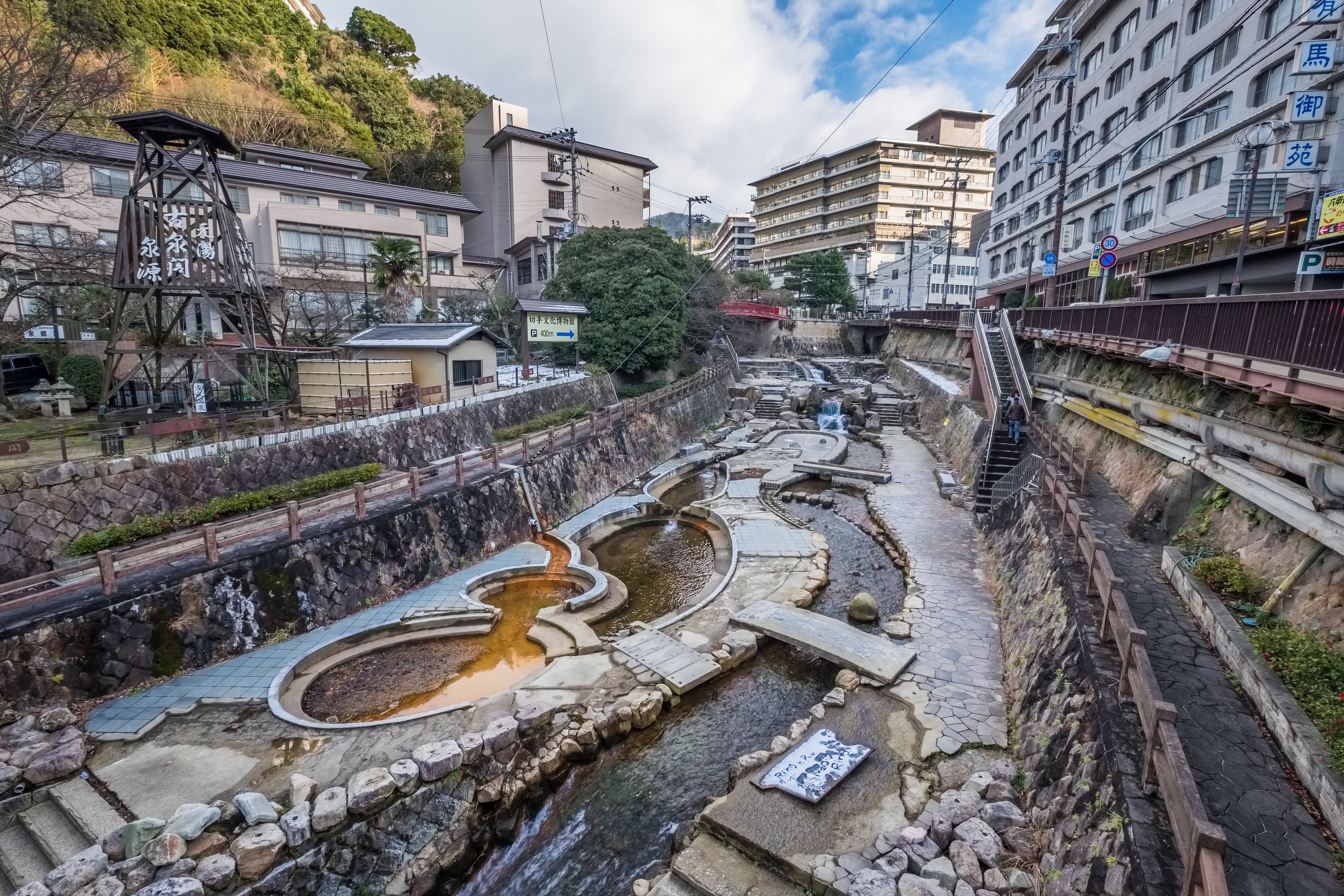 Photo Source: Adobe Stock
- Travel Time: 60 minutes
- Best Departure Hub: Umeda (Hankyu Sanban-gai Bus Terminal)
- Key Transit Lines: Direct Hankyu Express Highway Bus (Fastest & easiest) or Kobe Subway to Tanigami + Shintetsu Railway
- Best For: Relaxation, hot spring bathhouse culture, couples, winter warming
- Time Needed: Half day or full day
- DIY Difficulty: ★☆☆ (Easy via direct highway bus)
Hidden in a wooded mountain pocket just north of Mount Rokko, Arima Onsen is documented as one of Japan’s three oldest hot spring resorts, with records dating back over 1,300 years. It is celebrated for two distinct geothermal mineral waters: Kinsen (Golden Water), rich in iron and salt that warms the body deeply, and Ginsen (Silver Water), clear water containing radium and carbonate.
How to Spend a Day in Arima
- Public Bathhouses: Visit Kin-no-Yu for the iconic brown, mineral-rich Golden bath (there is also an outdoor foot bath outside) or Gin-no-Yu for the Silver waters.
- Private Day-Use Ryokan: If public bathing sounds intimidating or if you have visible tattoos, book day-use hot spring plans at established ryokans (such as Gekko-en Korokan or Arima Grand Hotel) that include a private reserve bath and kaiseki lunch.
- Town Promenade: Stroll narrow historic alleyways, sampling carbonated rice crackers (tanso senbei) and local craft beer.
- Local Tip: While the train route requires three separate transfers, the direct Highway Express Bus from Hankyu Umeda Station takes just 55 to 60 minutes directly to Arima’s town center without any transfers.
9. Mount Koya (Koyasan): The Sacred Buddhist Sanctuary
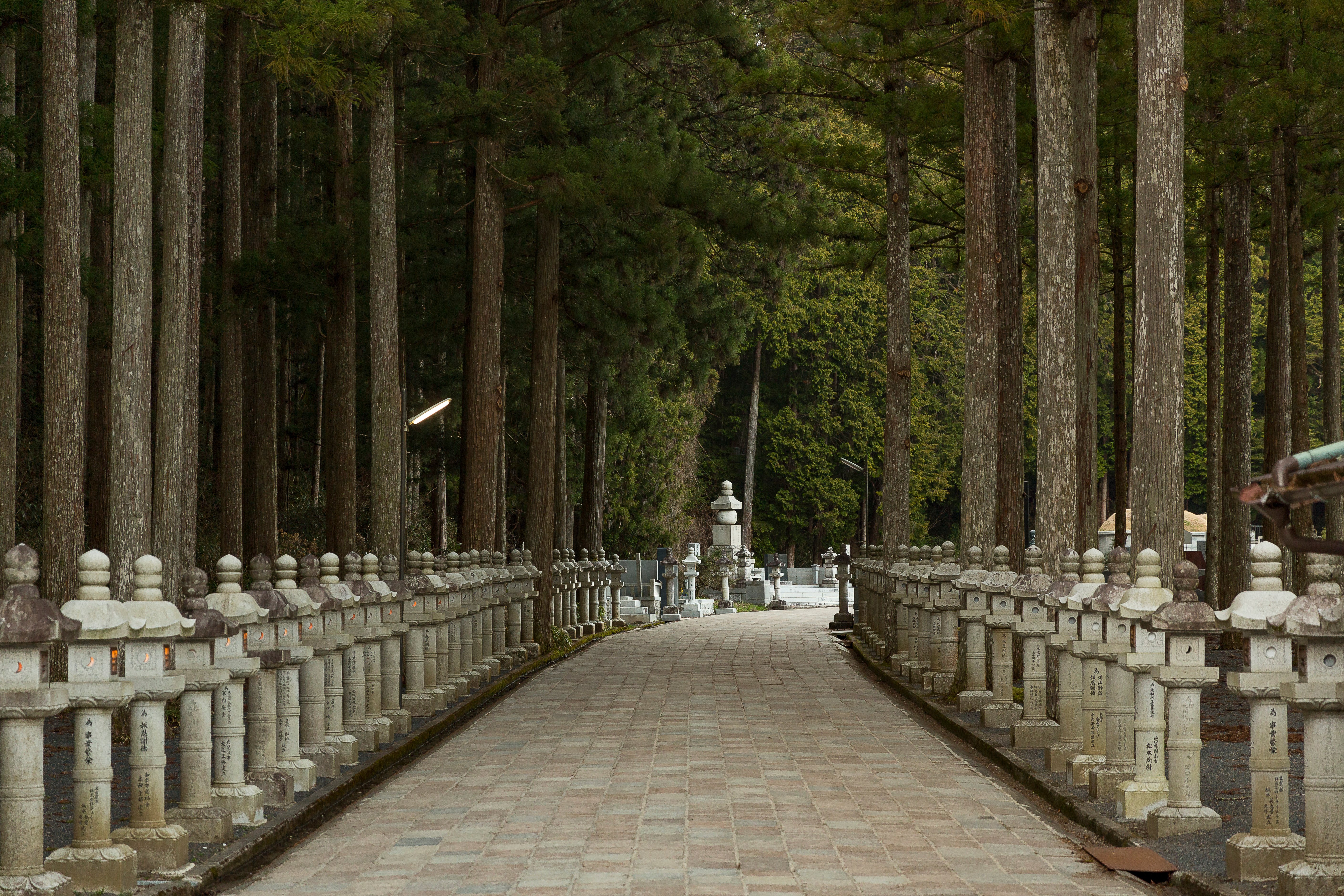 Photo Source: Adobe Stock
- Travel Time: 80 to 100 minutes
- Best Departure Hub: Namba Station
- Key Transit Lines: Nankai Koya Line (Limited Express Koya) to Gokurakubashi, then Koyasan Cable Car + Local Nankai Bus
- Best For: Deep spiritual history, mountain forest walking, temple architecture
- Time Needed: Full day (Start early)
- DIY Difficulty: ★★☆ (Moderate; multi-modal mountain transit coordination)
Founded in 816 AD by the monk Kobo Daishi (Kukai), Mount Koya is the world headquarters of the Shingon sect of Esoteric Buddhism. Sitting 800 meters above sea level within an eight-peaked mountain basin, it represents one of the most spiritually atmospheric corners of Japan.
Essential Highlights
- Okunoin Cemetery: Japan's largest and most atmospheric cemetery. A two-kilometer stone path meanders beneath ancient, towering cedar trees past more than 200,000 moss-draped gravestones and memorials, leading to Kobo Daishi’s sacred mausoleum.
- Danjo Garan: The central temple complex featuring the brilliant vermilion Konpon Daito pagoda, serving as a three-dimensional mandala.
- Kongobuji: The head monastery of Shingon Buddhism, featuring painted screen doors and the expansive Banryutei rock garden (the largest stone garden in Japan).
- Local Tip: Purchase the Nankai Koyasan World Heritage Ticket at Namba Station; it bundles round-trip rail, the funicular cable car ascent, and unlimited local Koyasan bus travel into a single discounted pass.
10. Mount Yoshino: Misty Ridges and Sacred Cherry Groves
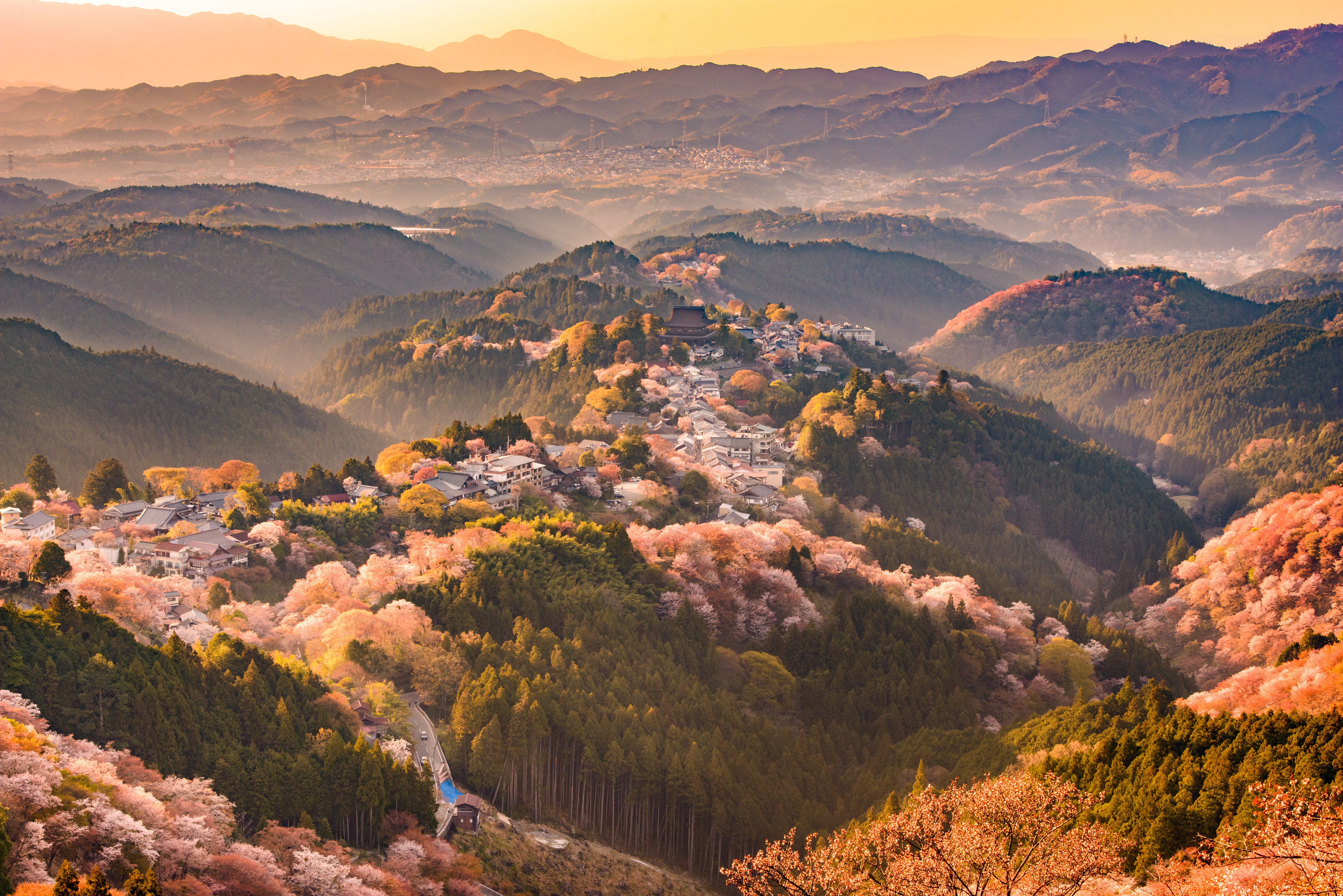 Photo Source: Adobe Stock
- Travel Time: 90 to 110 minutes
- Best Departure Hub: Osaka-Abenobashi Station (Tennoji)
- Key Transit Lines: Kintetsu Minami-Osaka/Yoshino Line (Direct Limited Express)
- Best For: Cherry blossom viewing (Sakura), alpine hiking, Shugendo mountain temples
- Time Needed: Full day
- DIY Difficulty: ★★☆ (Moderate; significant uphill walking and seasonal crowding)
Mount Yoshino in Nara Prefecture has been Japan’s most legendary cherry blossom destination for centuries. Over 30,000 mountain sakura trees carpet the ridges across four distinct elevation tiers (Shimo, Naka, Kami, and Oku Senbon). This elevation variation ensures an extended blooming season throughout April.
What to Do in Yoshino
- Kinpusen-ji Temple: The core of Shugendo mountain worship; its main hall (Zao-do) is the second-largest historic wooden building in Japan after Todai-ji.
- Panoramic Ridge Hiking: Follow the winding mountain roads and forest stairways up through village shops selling sweet persimmon leaf sushi (kaki-no-ha sushi) and yoshino-kudzu jelly.
- Local Tip: Wear proper walking shoes. Yoshino consists of steep pedestrian roads rather than flat city sidewalks. If visiting during peak cherry blossom season, reserve your Kintetsu Limited Express seats weeks in advance.
Culture, Heritage & Off-the-Beaten-Path
For travelers who have already seen Kyoto and Nara, these destinations offer preserved feudal streets, ancient history, and distinctive regional lifestyles without tourist congestion.
11. Hikone & Lake Biwa: Feudal Fortresses and Japan’s Largest Lake
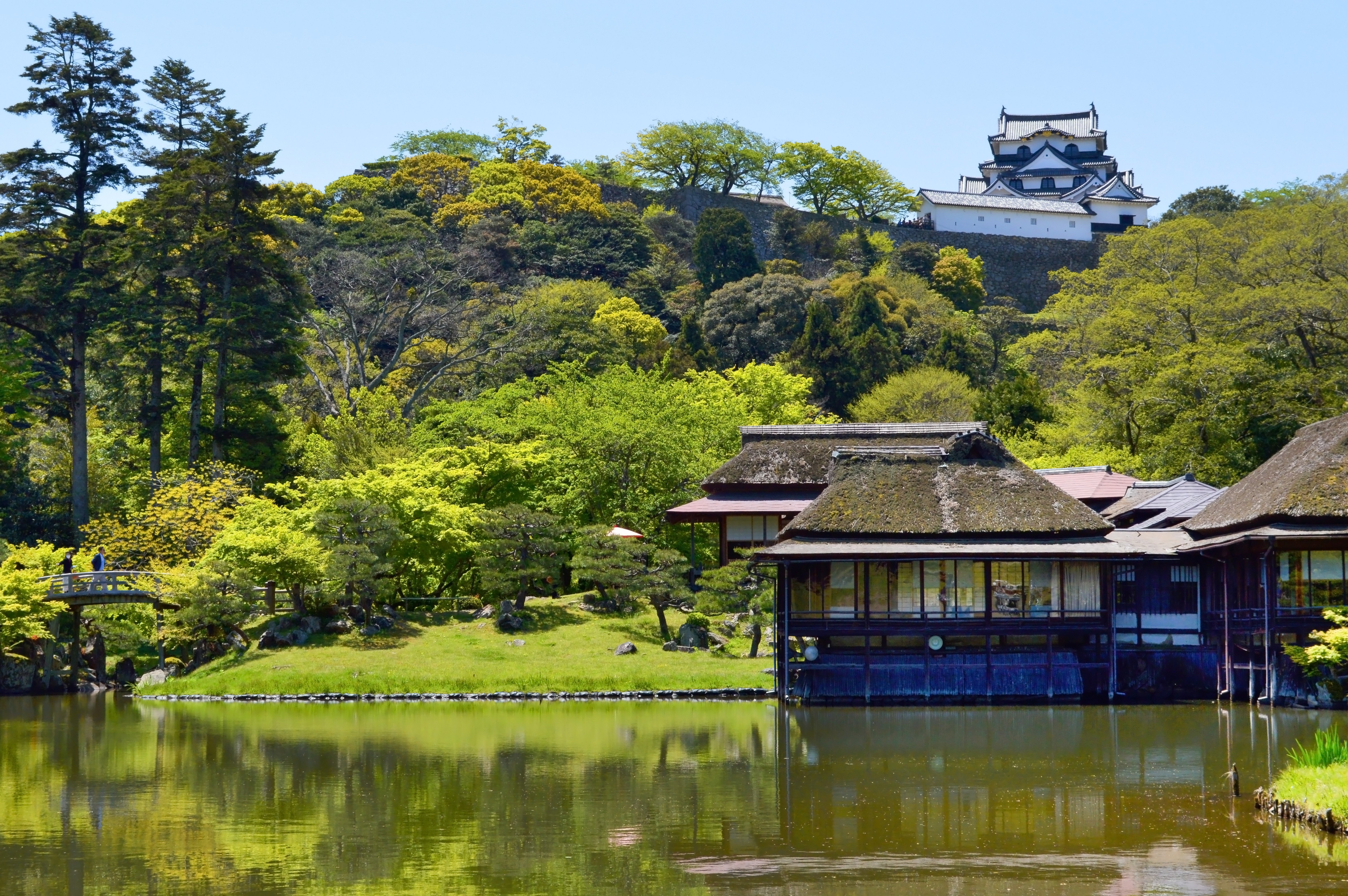 Photo Source: Adobe Stock
- Travel Time: 75 to 85 minutes
- Best Departure Hub: Osaka Station
- Key Transit Lines: JR Tokaido-Sanyo Main Line (Biwako Line Special Rapid)
- Best For: Intact castles, serene stroll gardens, freshwater views, uncrowded sightseeing
- Time Needed: Full day
- DIY Difficulty: ★☆☆ (Easy; direct JR train line)
Lake Biwa is the largest freshwater lake in Japan. While attempting to "see the whole lake" in one day is impossible, taking a direct train to Hikone on its eastern shore yields an exceptional day out.
Highlights of Hikone
- Hikone Castle: One of only twelve original, authentic surviving castle keeps in Japan, and an official National Treasure. It features untouched steep defensive staircases, arrow slits, and strategic gun ports.
- Genkyuen Garden: A tranquil daimyo (feudal lord) stroll garden set beneath the castle hill. A historic teahouse beside the pond serves matcha while framing views of the castle keep above.
- Yumekyobashi Castle Road: An Edo-period-themed streetscape offering Shiga’s famous Omi wagyu beef skewers and local sweets.
- Local Tip: Because Hikone sits on the JR Special Rapid line, you don’t need to pay for expensive Shinkansen tickets; standard local rapid services run direct from Osaka Station without changing trains.
12. Kurashiki Bikan Quarter: Canals, Willows, and Storehouses
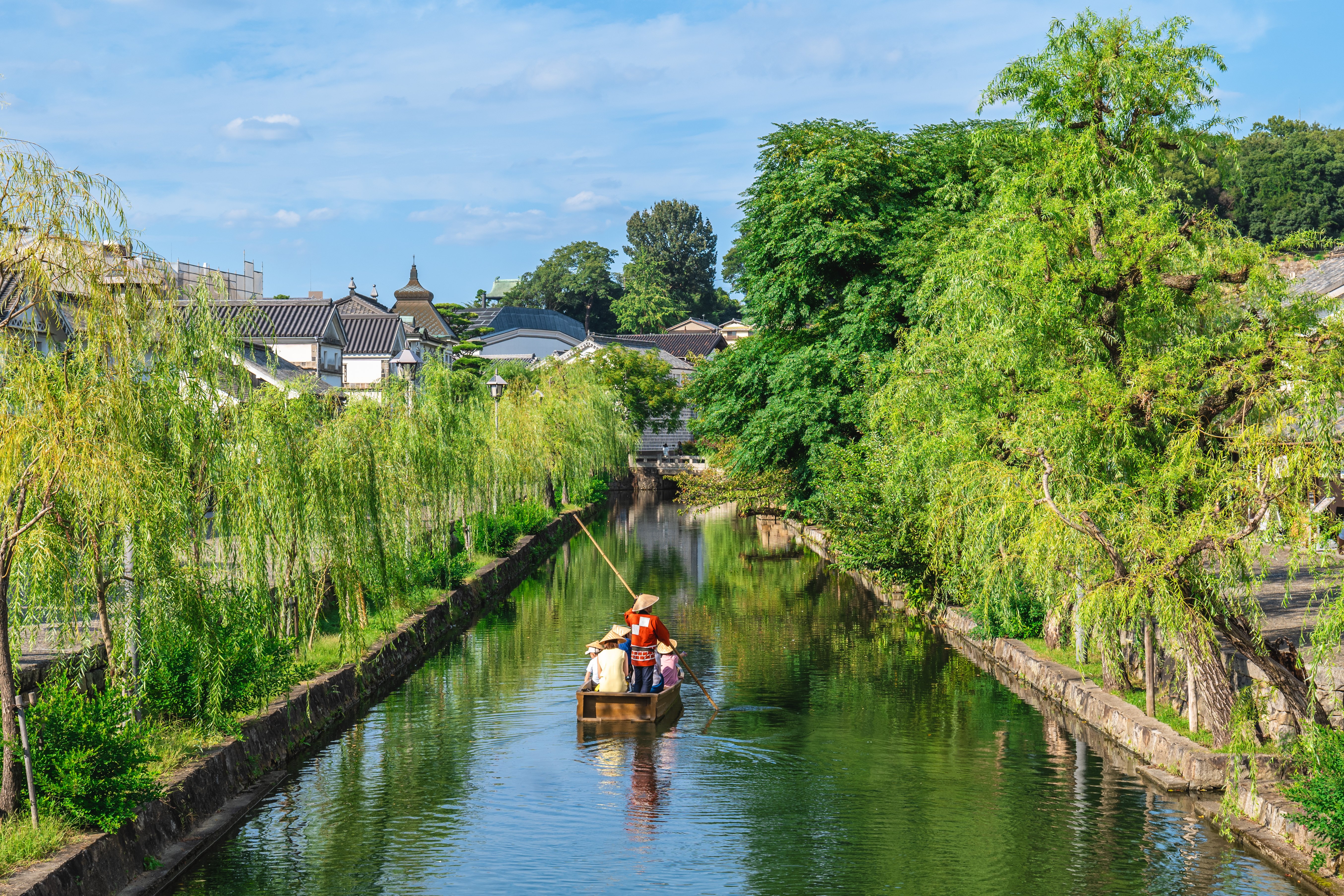 Photo Source: Adobe Stock
- Travel Time: 75 to 90 minutes
- Best Departure Hub: Shin-Osaka Station
- Key Transit Lines: JR Sanyo Shinkansen to Okayama, then JR Sanyo Main Line to Kurashiki (15 min)
- Best For: Preserved Edo-period architecture, craft shopping, denim, art museums
- Time Needed: Full day
- DIY Difficulty: ★☆☆ (Easy; Shinkansen connection is straightforward)
During the Edo period, Kurashiki served as an essential distribution center for regional rice shipments bound for Osaka. Its Bikan Historical Quarter remains preserved, featuring black-and-white tiled earthen storehouses (kura) reflecting into a quiet canal framed by weeping willow trees.
What to Do in Kurashiki
- Canal Boat Ride: Board a small traditional wooden punting boat steered by a local boatman along the canal.
- Ohara Museum of Art: Japan’s very first private Western art museum, housing masterpieces by El Greco, Monet, Matisse, and Picasso in a striking neoclassical hall.
- Kurashiki Kojima Denim Street: Browse independent denim workshops showcasing world-renowned Okayama selvedge denim garments, bags, and artisan dyed fabrics.
- Local Tip: Combine Kurashiki with a brief stop at Okayama Castle (The Black Crow) and Korakuen Garden (one of Japan’s Three Great Gardens), which sit right beside Okayama Shinkansen Station.
13. Asuka: Rural Cycling Through Japan’s Cradle of Civilization
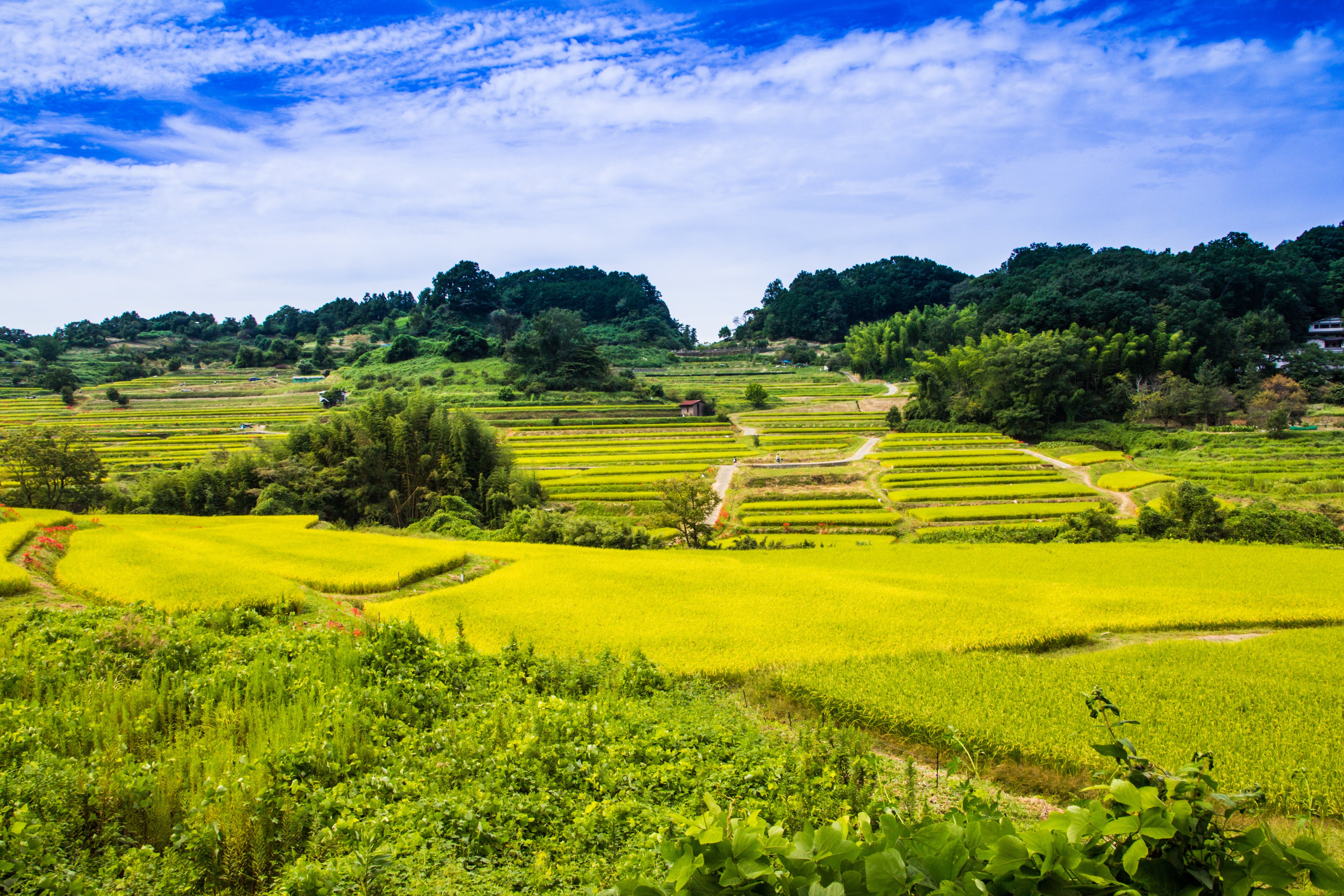 Photo Source: Adobe Stock
- Travel Time: 60 to 75 minutes
- Best Departure Hub: Osaka-Abenobashi Station (Tennoji)
- Key Transit Lines: Kintetsu Yoshino Line (Direct Express to Asuka Station)
- Best For: Cycling, archaeological mysteries, quiet countryside, rustic landscapes
- Time Needed: Full day
- DIY Difficulty: ★★☆ (Moderate; requires renting a bike and self-navigating country roads)
Before the grand imperial capitals of Nara and Kyoto arose, Asuka was the political and cultural heart of Japan (538–710 AD), where Buddhism first established its foothold and the early imperial state formed.
The Asuka Bicycle Experience
Unlike Kyoto's compact temples, Asuka’s ancient sites are scattered across lush, terraced rice paddies and sleepy farming hamlets. The best way to explore is to rent an electric-assist bicycle directly outside Asuka Station.
- Ishibutai Kofun: The monumental stone megalith tomb chamber of political chieftain Soga no Umako.
- Asuka-dera Temple: Japan’s oldest Buddhist temple complex, housing the nation’s oldest confirmed Buddhist bronze statue (cast in 609 AD).
- Mysterious Megaliths: Seek out carved granite monoliths like Kameishi (The Turtle Stone) and Saruishi (The Monkey Stones) dotting the valley pathways.
- Local Tip: Always request an electric bicycle (e-bike) at the station rental shop; the rural valleys feature subtle, rolling hills that quickly exhaust standard single-speed rental bikes.
14. Wakayama City: Castles, Coastal Lines, and Regional Ramen
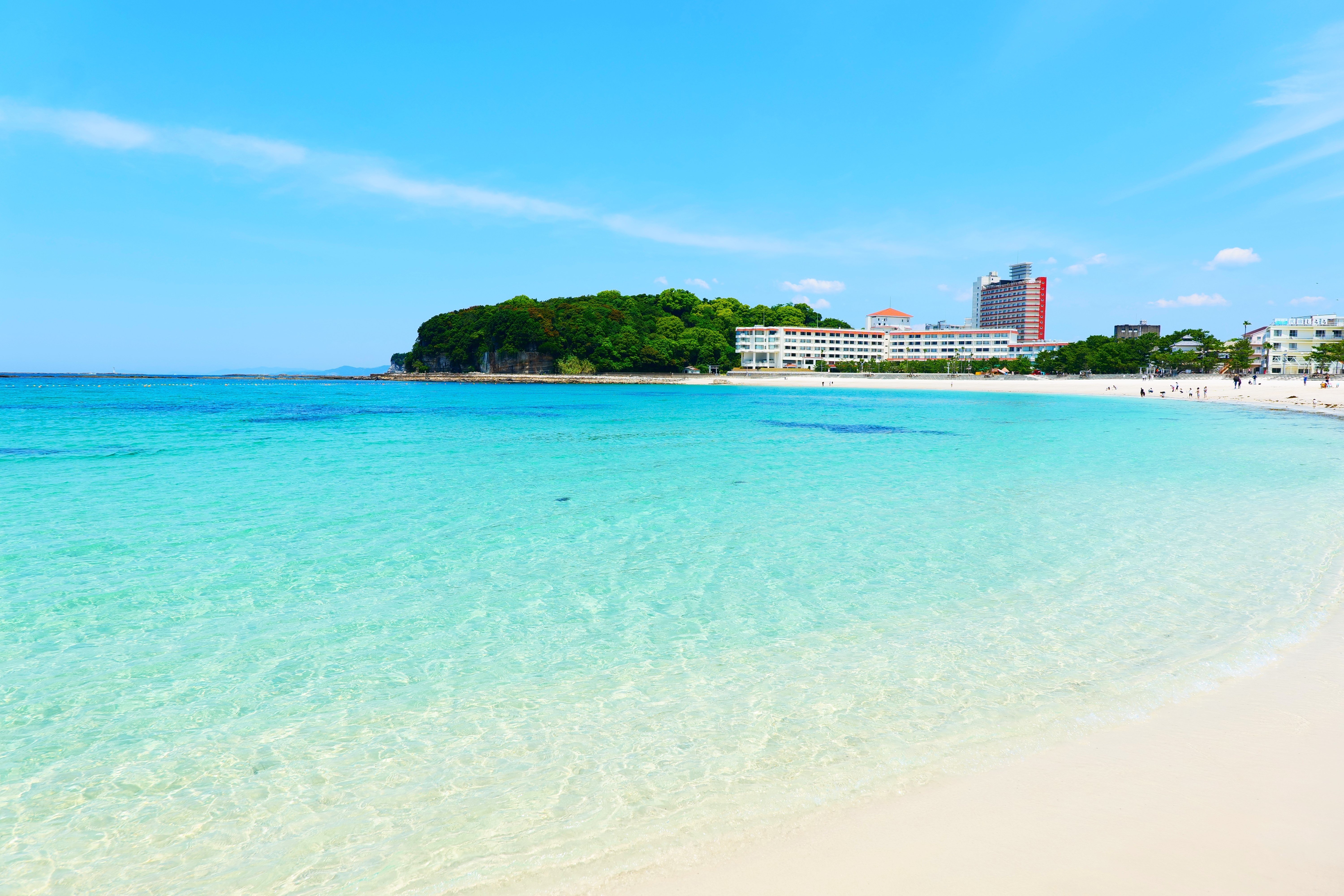 Photo Source: Adobe Stock
- Travel Time: 60 to 70 minutes
- Best Departure Hub: Namba Station
- Key Transit Lines: Nankai Main Line (Limited Express Southern)
- Best For: Train enthusiasts, foodie day-trippers, low-tourist-density exploring
- Time Needed: Full day
- DIY Difficulty: ★☆☆ (Very Easy via Nankai train lines)
Wakayama City sits at the mouth of the Kino River just south of Osaka. It offers a relaxed coastal getaway where foreign tourist groups are rare, making it ideal for seasoned visitors seeking everyday local hospitality.
What to Do in Wakayama
- Wakayama Castle: Perched on Mount Torafusu, featuring original stone foundation walls, hilltop views of the city, and the picturesque Ohashirouka covered wooden bridge.
- Wakayama Ramen (Chuka Soba): Indulge in the city’s culinary signature: a rich, savory pork-bone-and-soy-sauce (tonkotsu-shoyu) broth served with thin straight noodles and haya-sushi (pressed mackerel sushi).
- Kishi Station (Tama Cat Stationmaster): Board the charming Wakayama Electric Railway from Wakayama Station to rural Kishi Station, famous for its line of feline honorary stationmasters and themed trains.
- Local Tip: Pick up a day pass for the Wakayama Electric Railway if heading out to Kishi Station; it costs less than two individual one-way fares.
Long-Distance Day Trips (Full Day by Shinkansen)
15. Hiroshima & Miyajima: Poignant History and the Floating Shrine
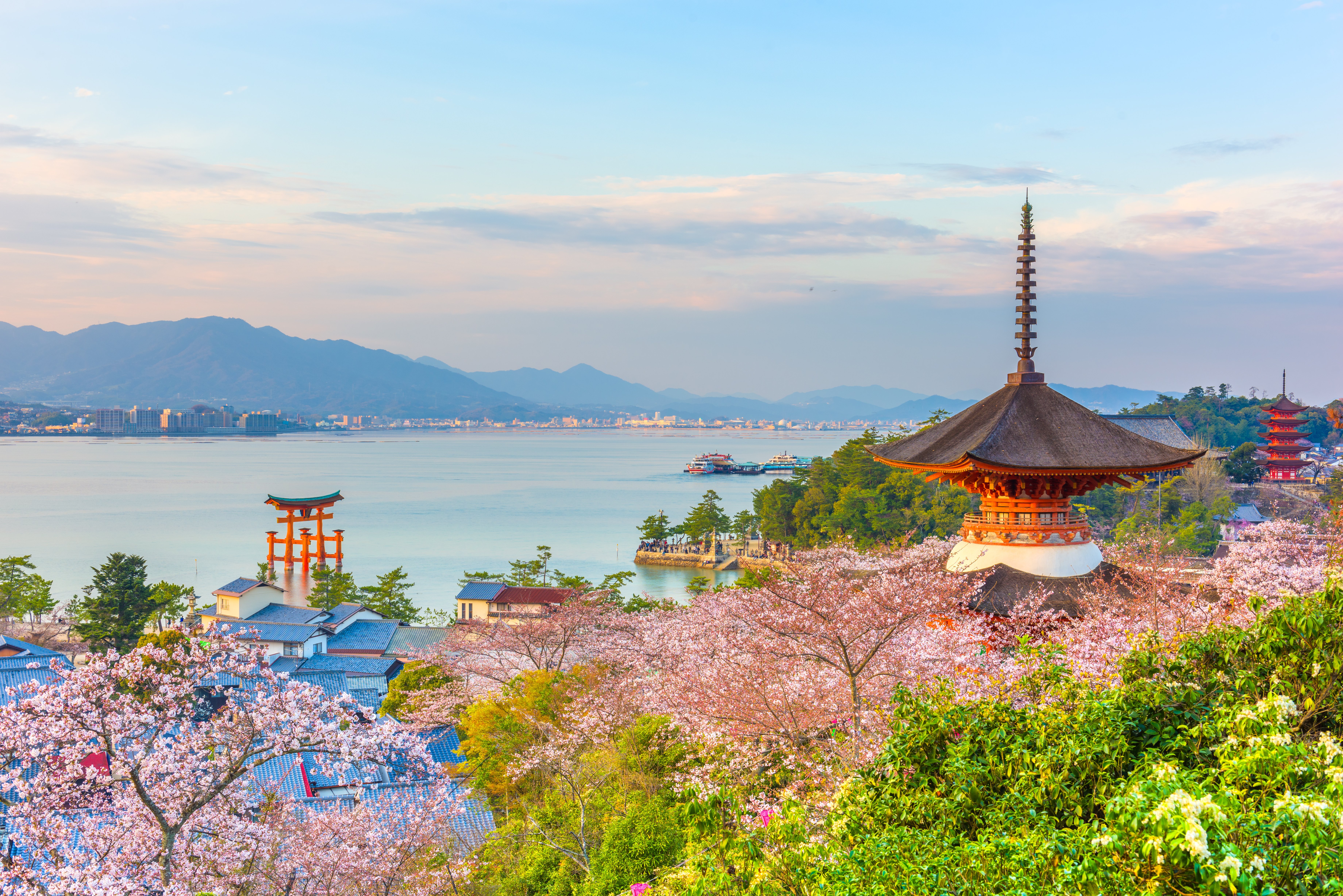 Photo Source: Adobe Stock
- Travel Time: 85 to 95 minutes to Hiroshima (Shinkansen) + 40 minutes to Miyajima (Local JR train + Ferry)
- Best Departure Hub: Shin-Osaka Station
- Key Transit Lines: JR Sanyo Shinkansen (Nozomi / Mizuho / Sakura)
- Best For: World history, iconic coastal landscapes, local seafood (oysters & okonomiyaki)
- Time Needed: Very full day (7:00 AM departure, evening return)
- DIY Difficulty: ★★☆ (Moderate to long; multi-stage transfers including Shinkansen, local tram/train, and ferry)
Travelers are often amazed to discover that Hiroshima is reachable from Shin-Osaka in approximately 85 minutes aboard the high-speed Sanyo Shinkansen. While spending an overnight is ideal, completing this iconic trip in a single day is entirely feasible if you begin early.
The Full-Day Strategy
- Morning (Miyajima): Board a morning Shinkansen before 7:30 AM to Hiroshima Station. Connect to the JR Sanyo Line to Miyajimaguchi, then board the 10-minute JR West Ferry to Miyajima Island. Marvel at Itsukushima Shrine and its world-famous vermilion Grand Torii Gate that appears to float upon the sea during high tide. Sample freshly grilled Hiroshima oysters and maple-leaf momiji manju cakes.
- Afternoon (Hiroshima City): Take the ferry and local tram back into central Hiroshima to explore the Peace Memorial Park, the poignant Atomic Bomb Dome, and the world-renowned Hiroshima Peace Memorial Museum.
- Dinner: Savor layered Hiroshima-style okonomiyaki cooked on hot griddles at Okonomimura before boarding your evening Shinkansen back to Shin-Osaka.
- Local Tip: Look into the JR-West Kansai-Hiroshima Area Pass. At roughly ¥17,000 for a 5-day consecutive span, it pays for itself with a single round-trip Shinkansen excursion between Shin-Osaka and Hiroshima.
Which Kansai Rail Pass Should You Choose in 2026?
Transportation logistics across Kansai underwent substantial revisions between 2024 and 2026. Do not rely on outdated travel blogs mentioning the old Kansai Thru Pass, which has been discontinued.
1. KANSAI RAILWAY PASS LITE (Private Rail & Subways)
- Pricing (2026): 2-Day Pass: ¥5,200 | 3-Day Pass: ¥6,500
- Coverage: Valid across Osaka Metro, Hankyu, Hanshin, Keihan, Kintetsu, and Nankai lines.
- Exclusions: Does NOT cover any JR Lines, Shinkansen, Kyoto City Subways, or public buses.
- Verdict: Excellent if your planned day trips focus primarily on Kyoto (via Hankyu/Keihan), Nara (via Kintetsu), Kobe (via Hanshin), or Koyasan (via Nankai).
2. JR-West Kansai Area Pass (JR Network)
- Coverage: Unlimited rides on JR Special Rapid and local trains across Osaka, Kyoto, Kobe, Nara, Himeji, and Lake Biwa (includes Kansai Airport Haruka Limited Express non-reserved seats).
- Exclusions: Does NOT cover the Shinkansen between Shin-Osaka and Kyoto.
- Verdict: Highly recommended if staying near Osaka/Umeda Station and taking day trips to Himeji, Hikone, or JR Kyoto routes.
3. Contactless IC Cards (ICOCA / Suica / Pasmo)
- Verdict: If you are only taking one or two short day trips (e.g., just Nara or Kobe), you often do not need an all-inclusive rail pass. Tapping your physical or Apple Wallet/Google Wallet IC Card on turnstiles is often cheaper and provides complete freedom without stressing over line restrictions.
Where to Base Yourself in Osaka: Namba vs. Umeda
- Base in Namba (Minami) if: You intend to take day trips to Nara, Sakai, and Koyasan. Namba gives direct access to the Kintetsu and Nankai rail networks without crossing the city. Furthermore, coming home at night puts you steps away from Dotonbori’s nightlife and street-food culture.
- Base in Umeda / Osaka Station (Kita) if: Your primary targets are Kyoto, Kobe, Himeji, and Hikone. Umeda serves as the chief transit nexus for JR Special Rapid services and Hankyu express trains running westward and northward.
- Base near Shin-Osaka if: You are prioritizing long-distance Shinkansen routes to Hiroshima, Kurashiki, or Tokyo.
Frequently Asked Questions (FAQ)
What is the single easiest day trip from Osaka?
Kobe and Nara are the simplest day trips. Both are reachable in 25 to 40 minutes via single-train lines without any complex transfers, and both drop you within immediate walking distance of major sightseeing hubs.
Can you visit Kyoto and Nara in one single day?
You can technically take a morning train to Nara, spend two hours at Nara Park, take the train up to Kyoto for the afternoon, and return to Osaka at night. However, we do not recommend this for first-time visitors. You will spend your energy racing between platforms rather than absorbing either destination. Give Kyoto and Nara their own separate days.
Is Hiroshima really manageable as a day trip from Osaka?
Yes, using the direct Nozomi or Mizuho Shinkansen (1 hr 25 min each way). However, you must commit to an early start (leaving Shin-Osaka before 7:30 AM) to comfortably combine the Peace Memorial Park and Miyajima Island.
Are guides necessary for day trips from Osaka?
For straightforward sightseeing (e.g., feeding deer in Nara or viewing Himeji Castle), self-guided exploration is very easy. Guides become invaluable when visiting culturally complex destinations like Sakai (where accessing authentic knife-crafting masters requires language access) or destinations with tricky logistics like combining Minoh Falls and Katsuo-ji Temple.
Explore Kansai Beyond the Standard Tour Routes
A memorable vacation in Kansai should never feel like an exhausting sprint between crowded checklist landmarks. The real magic of Western Japan lies in understanding the people, history, and craft traditions woven through each town.
Whether you want to discover the intricate metallurgy of knife sharpening in Sakai, find serene bamboo paths away from Kyoto’s tour buses, or navigate Kansai’s mountain temples with ease, Osaka JOINER is here to welcome you.
Based in central Namba under the Osaka Metro Group, our team of multilingual, licensed local experts crafts private guided experiences tailored to your travel speed.
Find Your Kansai Day Trip Experience with Osaka JOINER
Osaka JOINER is a guided tour company based in Namba Walk, Osaka, operating under the Osaka Metro Group. This guide was written from firsthand experience exploring Osaka's towers and neighbourhoods.