
Published by Osaka JOINER. Local guides based in Namba, Osaka, sharing practical travel advice for first-time visitors to Japan.
Summer in Japan: Festivals, Fireworks, and Cold Drinks in Osaka
Summer in Japan is one of those travel experiences that people either plan for very deliberately or stumble into completely unprepared. The humidity is real, the crowds at festivals are real, and the heat radiating off Osaka's streets at 2pm in August is very real. But so is the cold draft beer at a riverside terrace, the smell of yakitori smoke drifting through a lantern-lit alleyway, and the special feeling of watching a fireworks display erupt over a city that really knows how to celebrate summer.
If you are arriving between June and August, this guide covers what to expect, how to stay comfortable, and where the actual good stuff happens after dark.
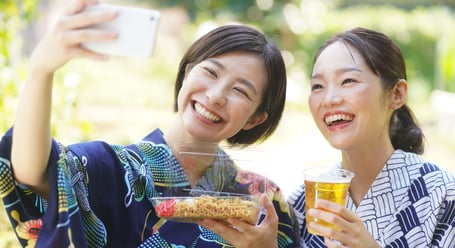
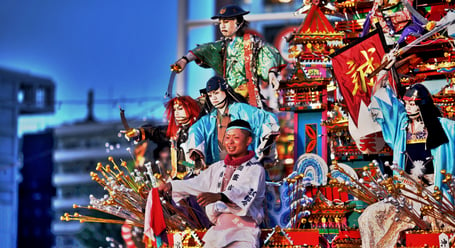
Enjoying festival in Japan, and the Tenjin Matsuri (Osaka)
What Summer in Japan Actually Feels Like
June starts with the tail end of rainy season (tsuyu), which brings grey skies and high humidity but also the brief, tranquil and beautiful firefly season in river valleys outside the city. By July the heat is fully established, and August is when Japan goes all-in on summer: the festival calendar is packed, fireworks displays (hanabi taikai) happen almost every weekend across the Kansai region, and the evenings become the most social time of the entire year.
The local response to summer heat is quite clever. Yukata, the lightweight cotton summer kimono, are everywhere at festivals, and wearing one is really practical rather than just a tourist activity. Kakigori, finely shaved ice with flavoured syrups, is sold at every festival stall and is significantly tastier than it has any right to be. Kyoto's Kibune district offers riverside dining on wooden platforms suspended just above fast-moving cold water, which sounds gimmicky until you are sitting there.
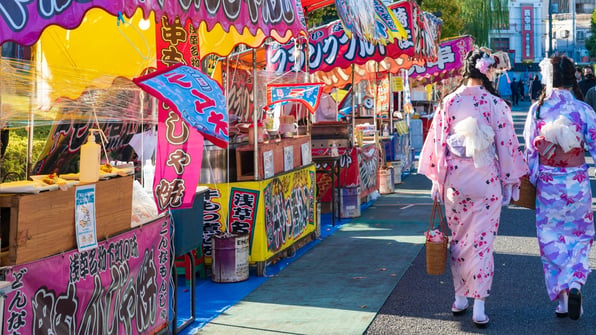
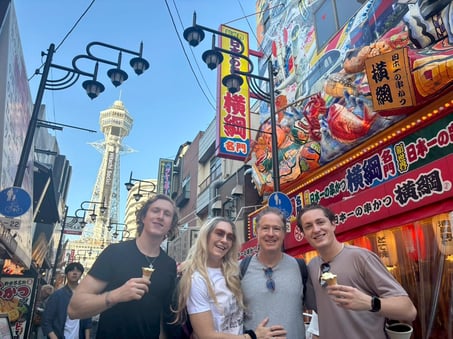
Stalls during the summer festival in Japan
The rhythm of a summer day here tends to shift naturally: do the sightseeing in the morning before the heat peaks, find somewhere cool in the afternoon, and save the best hours for evening when the temperature drops and the city comes alive.
The Smartest Way to Structure a Summer Day
The single best piece of advice for summer in Japan: do your moving in the morning.
By 9am, the air is still manageable and the major sites are quieter. By 1pm, the pavement is radiating heat and even short walks between train stations become unpleasant. The local approach is to front-load the day, take a long midday break somewhere cool, and then come back out in the late afternoon when the temperature starts to ease.
For first-time visitors to Osaka who want to make the most of the cooler morning hours, our half-day city tour is built exactly around this logic. Starting at 9am, we cover the city's main landmarks on foot and by subway across four hours, finishing at Dotonbori just as the midday heat arrives.
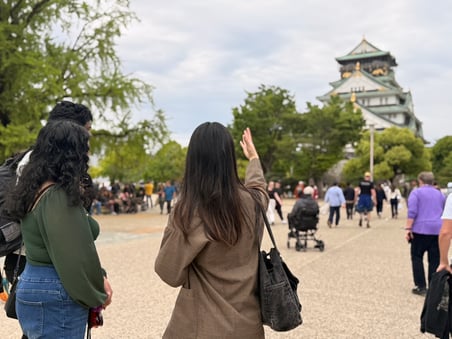
The route covers Osaka Castle and its surrounding park, Shitennoji (one of Japan's oldest Buddhist temples, and considerably less crowded than the Kyoto equivalents), the frozen in time retro neighborhood of Shinsekai, and Kuromon Market, where the city's chefs have been shopping for fresh seafood and produce for generations. By the time you reach Dotonbori and the tour wraps up, you have covered the essential Osaka in a single morning, have your bearings, and still have the whole afternoon and evening ahead of you.
Practical Tips for Surviving the Heat
These are the things that actually make a difference.
Hydration matters more than you think it will. Japan's vending machine density is really one of the country's great logistical achievements: cold green tea, sports drinks like Pocari Sweat and Aquarius, and cold black coffee are available on almost every street corner for around 150 yen. Drink more than you think you need, especially if you are walking between sights.
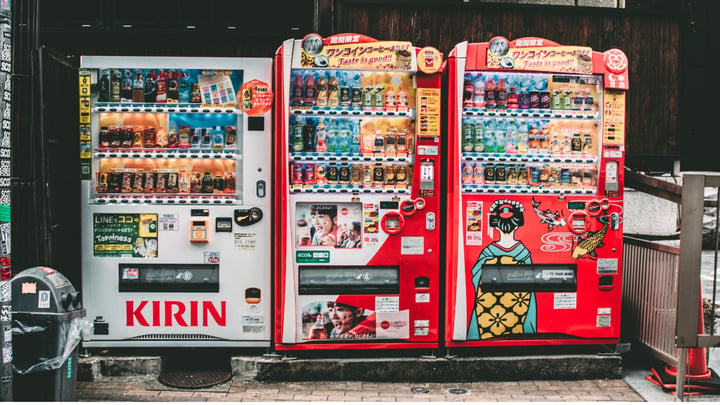
Japan's vending machine selection
Use coin lockers. Every major train station in Osaka has them, and dropping your bag before a full day out, it will be one of the best decisions you can make. Luggage and summer heat are a miserable combination.
Dress for the outside temperature, but carry a light layer. Trains, shopping centres, convenience stores, and most indoor venues run their air conditioning at a level that feels aggressive after an hour on the street. The shift from 35 degrees outside to 18 degrees inside catches a lot of visitors off guard.
A hand fan is worth buying at a convenience store or festival stall. They are cheap, effective, and look considerably less awkward than you might imagine.
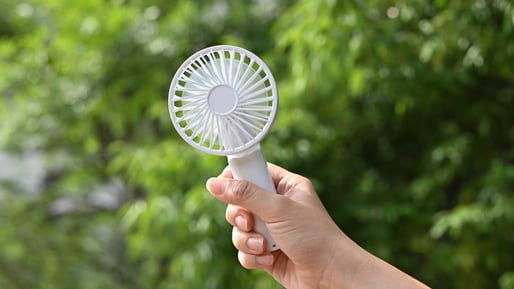
Hand fan or portable fan, one of the best quality-of-life during the hot summer of Japan.
Sun protection is taken seriously here. Convenience stores stock sunscreen, UV-protective arm covers, and cooling sprays. If you are spending long stretches outdoors, the cooling sprays in particular are worth picking up.
Timing matters. The midday window between roughly 11am and 3pm is when the heat is at its worst. Structuring your day to be indoors or in shade during those hours, and saving outdoor exploration for morning and evening, makes a substantial difference to how much you enjoy the rest of the day.
Fireworks Season: What to Know
Hanabi taikai are a really significant part of Japanese summer culture, not just a backdrop. The displays are large, carefully choreographed, and attended by crowds in yukata who treat the whole event as a major social occasion. The Naniwa Yodogawa Fireworks Festival and the PL Fireworks Art Festival in Tondabayashi are among the biggest in the Osaka area and draw enormous crowds.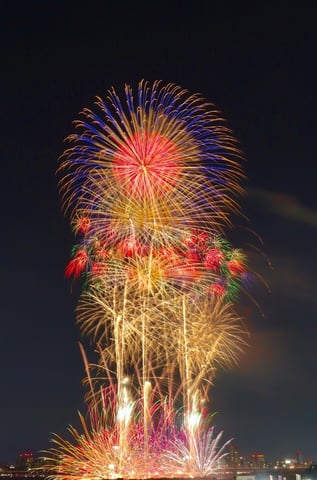
Firework festival in Osaka at Yodogawa River
A few practical notes: arrive early, bring something to sit on, and accept that the journey home will be slow. Trains after major fireworks events are packed, and the walk from the venue to the station takes longer than Google Maps will suggest. It is worth it.
Afternoons: The Case for a Brewery Visit
The 1pm to 4pm window is really the hardest part of a summer day to fill well. It is too hot for comfortable outdoor exploring, most temples look better in softer light anyway, and sitting in a cafe for three hours gets old quickly.
A brewery visit solves this well. Japan's brewing culture is meticulous in the way that most things here are meticulous, and going behind the scenes at a working facility gives you a really interesting look at how precision and craft intersect in an industrial setting. The tasting at the end, with beer poured fresh from the source, is considerably better than the same beer from a supermarket shelf.
Our Brewery Tour handles the transport and logistics, takes you through the production floor, and gets you back into the city in time for the evening. It is a natural midday anchor for a summer day, and the air conditioning alone makes it quite enticing and worth serious consideration.
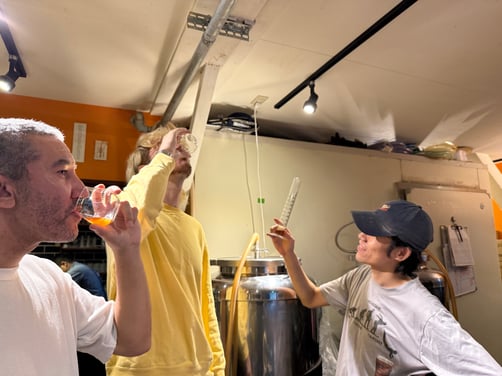
Click to taste the flavor of the breweries
Evenings: Osaka's Izakayas and the Yokocho Alleyways
This is where summer in Osaka really shines its reputation.
As the temperature drops after 7pm, the city's yokocho, narrow lantern-lit alleyways packed with tiny counter bars and standing izakayas, become the best place to be. Areas around Namba, Shinsaibashi, and the streets behind Dotonbori have the kind of concentrated evening energy that is difficult to describe without sounding like a tourism brochure, so the better approach is simply to experience it.
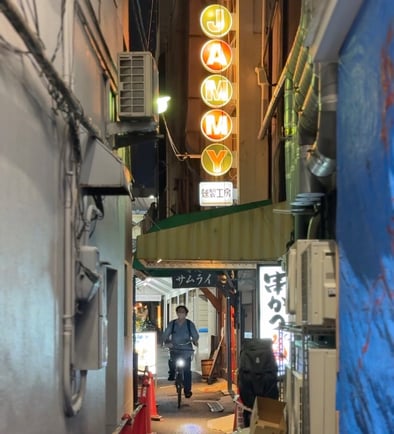
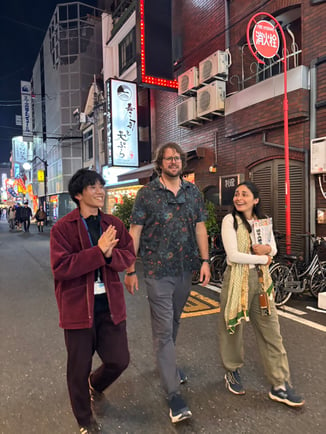
Osaka JOINER's guiding through Namba
For summer specifically, the drink lineup is worth knowing in advance. Cold draft beer (nama biiru) is the baseline. Whisky highballs, made with Japanese whisky and particularly fizzy soda water, are ubiquitous and well-suited to the heat. Seasonal chu-hi, shochu-based cocktails flavoured with summer fruits like ume (plum) or yuzu (citrus), appear on menus from July onwards and are lighter and more refreshing than they sound. Cold edamame, yakitori from the charcoal grill, and chilled tofu with ginger and spring onion are the food that goes alongside all of it.
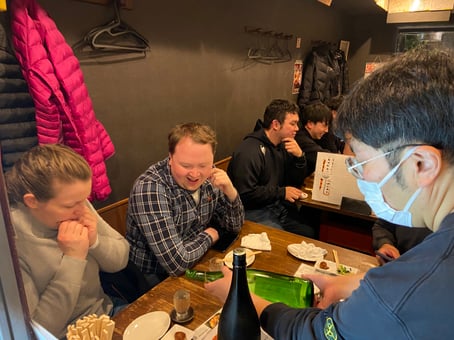
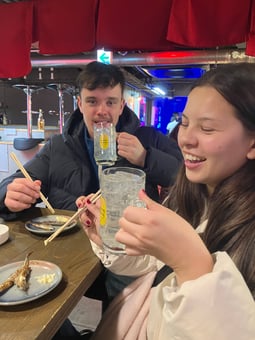
Japanese Sake being poured on the cup, and a couple drinking Highball
The real challenge with the yokocho areas is navigation. The best bars are small, often unlabelled in English, and have their own unwritten customs around ordering, sharing counter space, and settling the bill. Walking in alone without any Japanese is doable but can feel disorienting, particularly if you are not sure whether a place that looks full actually has space.
Our Bar Hopping Tour in Osaka is designed specifically for that situation. We take small groups into the frozen in time retro bars that tourists rarely find on their own, handle the introductions and ordering, and walk you through enough of the local etiquette that you will feel comfortable continuing independently afterwards. It runs in the evenings, fits naturally into the after-dinner part of a summer night, and works equally well for solo travellers and small groups.
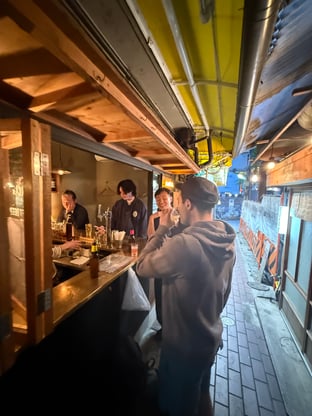
Enjoying drinks at a small standing bar in a lantern-lit alleyway
A Quick Summer Reference
Cold drinks are everywhere. Vending machines, convenience stores, and supermarkets all stock cold beverages. Budget 150 to 200 yen per drink and drink frequently. You can also use your IC card (ICOCA, SUICA, PASMO) to pay for drinks at vending machines and convenience stores.
Coin lockers are at every major station. Sizes range from small (backpack) to large (rolling suitcase). Prices run from 300 to 700 yen depending on size.
Yukata rental is available throughout Osaka and Kyoto, particularly around festival season. If you are attending a matsuri or fireworks event, it is worth the experience.
Festival and fireworks schedules change year to year. Check the Osaka Tourism Bureau's current listings before you arrive rather than relying on fixed dates from previous years.
Trains after fireworks events are slow. Build in at least an extra hour and consider eating near the venue rather than rushing back to the city immediately.
The evening is the best part of summer in Osaka. Plan accordingly.
Summer here rewards people who stop trying to maximise sightseeing and start paying attention to the rhythm of the place instead. The temples will be there in the morning. The cold beer, the fireworks, and the lantern-lit alleyways are where the season actually thrives.
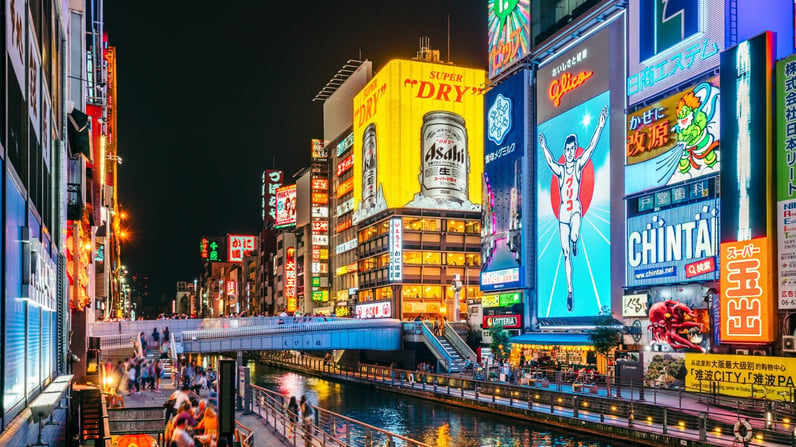
Dotombori at night